Thursday, August 26, 2010

Babe Cranfield, Mosconi and Long Runs

Reader Dave Capone sends in this note about the late Hall of Famer Arthur "Babe" Cranfield, who was one of only a handful of men who may have broken Mosconi's 526-ball straight pool record. I say "may," of course, because Cranfield's claimed run of 768 balls was never confirmed. Mosconi had plenty of witnesses for his 526-ball run and an affidavit on record at the Museum of American History to prove it.

But Cranfield made plenty of other long runs, including the 32-rack run apparently witnessed by Mr. Capone, as described below.  Billiards Digest columnist George Fels also notes that Cranfield once ran 420 balls in straight pool on a 5 by 10 table. Fels says this feat was witnessed by a crowd in Syracuse, New York, Cranfield's hometown.  A run that long would mean Cranfield plowed through 30 racks without a single miss. Most players can't run 30 balls, much less 30 racks. Cranfield also was the only player ever to have won national junior, amateur and professional titles.

So anyhow, that's Babe Cranfield. Here's what Dave Capone has to say about his star-struck encounter with him:

I went to Hollywood Billiards in Syracause N.Y when I was 19 years old. I walked in the first time and all the tables were open. I said to the person that was running the place that I would like a table. He said which one would you like and I said 'I'd like the one in the middle.' He told me that it was reserved for someone. So I took one two tables over. This older man came with his own billiard balls and took the table I wanted the first time. I started to watch him play and he was runing rack after rack so I stopped playing myself and started watching him play. I didn't know him at the time so I left and came back the following week and he was already there. I starting playing and he came to me and said (he was) getting bored (and asked if I) would like racking the balls. I got so excited because I was just starting to learn how to play. I said I would love to rack for him. I racked and racked and racked. I was counting the racks. When he finally missed, he ran a total 32 racks. I was amazed!!!!!  He told me his name was Babe Cranfield.  It really was a treat at my young age to have an opportunity to witness such a great talent.

Wednesday, August 25, 2010

The History of Sharking

Pool, as is noted in this great Sports Illustrated article that I've just stumbled across online, involves sustained waiting. "When one player is at the table, there is nothing his opponent can do except sit and hope that he misses," wrote Robert Coughlan in the April 4, 1955 edition.  "The player at the table, on the other hand, knowing that a miss will give his opponent a chance to make a long run and win, is under steadily increasing stress to keep pocketing balls. ... This can be a nerve-racking pastime."

This is why sharking can be so effective. Drop your cue at an opportune moment, stand in the line of vision of a shooter, excessive fidgiting: all of these can be effective ploys. The game rewards those adept at psychological warfare -- but in a manner that is not too overt. This is the definition of sharking. "Anything obviously calculated to rattle an opponent is against the rules, so players develop subtle forms of torture for one another," writes Coughlan. This is in contrast to hustling, where a player hides his or her true speed or deceives an opponent into a game he can't possibly win.

I've come across a great book on the topic of sharking entitled "The Theory and Practice of Gamesmanship." It was written by Stephen Potter in a faux Victorian style, with "Gamesmanship" being the euphemistic term the author uses for sharking. The book is appropriately subtitled "The art of winning games without actually cheating."

I've gone through this book, Coughlan's article, and my own notes from Hustler Days and The Hustler & The Champ to create a list of pool's greatest sharking techniques.  Be sure to try these at your local pool hall. It's a great way to make friends.

*  The Annoying Body Noise Shark
A well-timed coughing fit, burp, or loud sneeze during your opponent's shot can put a player off their game.

* The Line of Sight Shark
 Writes Coughlan: When a player is shooting down-table, the opponent "may seize the moment to wipe his hands on a towel or shower them with powder, sight down his own cue or file the cue tip, start telling a joke sotto voce to someone sitting with him, or discover an itch that must be scratched vigorously." The showering-the-hands-with-powder shark was popular with Minnesota Fats.

* The Lauri Searchlight Shark
Pool legend Onofrio Lauri would polish his bald head in the line of sight of his opponent. Sometimes he would get it to shine so brightly that he could use it to reflect a dazzling light into his competitor's eyes.


* The Willie Mosconi Shark
Some very good players can destroy their opponent's game simply by assuming their regular haughty demeanor. Both Willie Mosconi and Ralph Greanleaf would exude such extreme confidence that their opponents felt like insects by comparison. Mosconi almost never lost during his mind-numbing exhibition years on the road. He said this was because his opponents needed to play above their regular skill level, but because they were so unnerved by him they generally played below it.

* The Minnesota Fats Shark
Your opponent on a roll? Stop the game to eat a sandwich. Repeat as necessary.

* The Nice Chap Shark
Also, from the Gamesmanship book: when playing a polite young player and one that has been well-brought up by their family, it can be useful to subtly implant the idea that it would be a rather rotten trick to beat an old man by too much. "Thereby the fatal 'letting up' is inaugurated, which can be the undoing of so many fine players," writes Potter.

* The Free Advice Shark
Give free -- but useless --  advice to your opponent. Potter says it can be as simple as telling him or her to "take it easy" before shooting. Also, telling your opponent to be sure to "look at the line" works well.


* Potter's Improvement on the Primitive Hamper Shark
The name of this shark, again from Potter's book, is admittedly ridiculous.  But the essence of it is to interrupt your opponent's flow -- "the hamper" -- but in a way that is seemingly meant to assist your opponent. For example, just as your opponent is in mid stroke, you can tell him to stop. Then, indicating some kids well on the other side of the pool room, say: "those damn kids -- walking across your line of sight."

Potter's book has plenty of hilarious examples of more sharks, including ploys that are useful in tennis and golf. Have your own favorite shark story? Send it in.

-- R.A. Dyer

Sunday, August 15, 2010

Pool Synergy 10: Don "Cincinnati Kid" Willis

The two out-of-towners are relatively short men, in their thirties, the unfortunate age when the paunch begins to show. Neither carries a pool cue. They've appeared unannounced and unexpected in a back-water pool room, which they immediately size up.  Who in here has some gamble to them?  They get a table. They rack for nine-ball. They start shooting.

"Remember how I beat that boy down in Nixonton," says one, a bit over loudly.  He makes his shot, but it wobbles in. "Kid never had a chance." He blasts in another ball, but the shape is awful. "Look at that," he says, admiring his own game. "Ever seen anything like it?" He keeps shooting, keeps boasting. He makes some balls and he misses some. He plays passable pool. Not great pool, but passable pool.  And yet he keeps on. The boasts keep getting bigger. Louder. Remember this? Remember that?

And then here it comes. Here it comes. He looks over to the local boy at the next table.  Hell, I bet I can even beat this guy right here, he says. Hey buddy you wanna play?

Maybe the local says yes and maybe he says no. Maybe he has these strangers pegged as hustlers, or maybe he has them pegged as hapless and helpless braggarts.  It doesn't really matter. This is how it starts: A few games a passable pool, a few boasts, some loud taunts. And then the trap is sprung. In less time than one might expect the challenge is met. Some hot shot local will approach the strangers or someone will call in a ringer from the pay phone. Hurry down. Bring your stick. When the hustle works just right, when the know-nothings are loud enough and the locals are sufficiently irritated, whoever steps up will have some gamble to him.

And then it's all over.

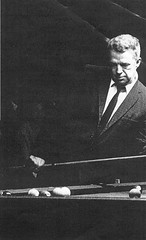
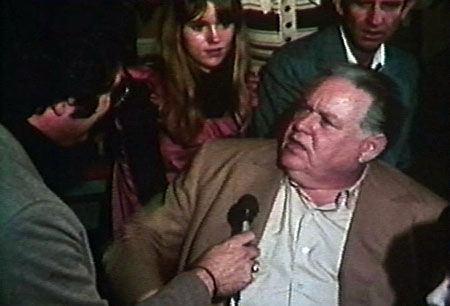
This is the Big Hurrah hustle, performed regularly over several years by Wimpy Lassiter and his road partner Don Willis. That's a picture of Willis at the upper left and Lassiter at the right. The task we've been assigned for this month's Pool Synergy edition is to write about a pool player's support network.  As this blog is devoted to pool history I've decided to devote my essay to Don Willis, Lassiter's long-time wing man.

Lassiter, of course, is a man that all serious pool players should already have heard of. He dominated the Johnston City tournaments during the 1960s and is still considered by many as the greatest nine-ball player of all time. Lassiter also won and lost a fortune in Norfolk during his World War II Coast Guard days.

Willis, however, is much less known. He eschewed tournaments, and not until his later years would he even consent to be photographed for publication. I describe him here for the sake of thematic convenience as Lassiter's wing man, but that really is to sell Willis very much short. He regular beat the great nine-ball player and took occasional scalps from other giants, including, supposedly, both Ralph Greenleaf and Willie Mosconi.  Willis was an intimidating player. As Lassiter once said: "If I ever had to have someone else shoot pool for my life, win or lose, live or die ...  the man that I’d have shooting for me is Don Willis." Now that's a support network.

The so-called Cincinatti Kid was born on May 1, 1909. Like Lassiter, he began playing seriously during the Great Depression, as a teenager. His long partnership with Lassiter began shortly after venturing into Lassiter's hometown of Elizabeth City, North Carolina, during a road trip. Willis challenged Lassiter to a game of nine ball, on Lassiter's home turf, and then had the temerity to beat him. Lassiter was so startled by this outcome that he immediately befriended the Ohio-native. They then spent the next decade and a half together.

"I think my best friend is Wimpy Lassiter," Willis told author Thomas Fensch, for his 1970 book The Lions and the Lambs. "What a team we were. We were together for 15 years. In 1959, he came to Canton and stayed a year. We practiced together and played together. We never had our own cues when we were out on the road. It used to be when you came into a new house with a cue under your arm, everyone’d say, ‘who’s this guy with the cue?’

"We just out-shot everyone. We never lost either -- never left town broke. Sure we were down low at times, but there was always someone else to play."

Willis was a master of all sorts of proposition bets, such as running backwards, making basketball free throws, and making wing shots.  Twice during his life he made 42 in a row. "They called me Wing-Shot Willie," he once said.  He was also a card player (which came in handy plenty on the road), could juggle three pool balls and the chalk, and play an excellent game of ping-pong and horseshoes. "I’ve even also won bets on the proposition that I can't name in order the 130 largest cities of the U.S. There are 130 cities over 100,000 population. It’s easy."

But Willis never was a tournament player. He said he'd rather play a nobody for $7 than a world champion for nothing. That's where Willis found the fun of pool -- in the gambling. "I never practiced just for the sake of practicing. I always wanted to play -- to play someone," he said. In the pantheon of pure action players, few were better.   Playing the Big Hoorah hustle, he could beat anybody. Anybody who stepped up.  And then after he had wrung the last dime from one sucker, Lassiter would step up and beat another. The pigeons didn't stand a chance.

"Lassiter was the one who said I had the heart of a lion and I think that’s the best thing anyone has said about me," Willis told auther Fensch.

Willis died on March 2, 1984, at the age of 74. He and his wife Mary were parents to six children and had 13 grandchildren.

You can read more about Don Willis in the excellent retrospective at the Greater Canton Amateur Billiard Association website, which you can find here.  (The picture of Don Willis at the top left was retrieved from that website, although it was originally published in the Army Weekly, on Oct. 27, 1944.) Author John Grissom also penned a fine essay about Don Willis in his book Billiards. I found that essay reprinted here. I also have a section about Don Willis in Hustler Days, and Robert Byrne describes Willis in his 1996 book, The Wonderful World of Pool & Billiards.

As for Lassiter, he's also referenced extensively in Hustler Days. The picture of Lassiter, at the upper right, is from that book but was originally published in Billiards Digest.

-- R.A. Dyer

Thursday, July 15, 2010

PoolSynergy9: Hustlers, Beats and Others


It would have been 1982 or so, back during my college days, and a friend of mine had just handed me a copy of Hustlers, Beats and Others. The book was the width of a Lucky Strike cigarette. A real thin paperback. I remember the pages were dog-eared and coffee stained.

My friend had discovered Hustlers, Beats and Others atop a pile of similarly musty books at an Austin thrift shop. He figured — quite correctly as it turned out — that this book would interest me. He paid a quarter for it. "Check this out," he said, grabbing the book back for a moment. "Right here. There's a whole section here on hustlers."
  
Hustlers, Beats and Others is about exactly what it says it is about. New York sociologist Ned Polksy, the author, describes the lives of beatniks, petty thieves and pool hustlers. He examines them almost as if he were examining members of a tribe, writing about both their gathering places and their customs. My friend gave me the book because he knew I was familiar with the game. But the pool halls described in it were nothing I recognized. In Polksy's world, serious men argued over "spots," made giant wagers and sometimes cheated one another. In mine, college kids played for beers.

Flash forward: I graduated from the University of Texas in 1986 and then bounded off to Costa Rica, where I had accepted work at The Tico Times, an English language newspaper. Not long afterwards Touchstone Pictures released The Color of Money, the pool film starring Paul Newman and Tom Cruise. A bunch of us ex-patriot reporters bounded out to the local movie theater to see a subtitled version of the film and then afterwards, inspired, we ventured into a San Jose pool hall.  It was up a flight of cement stairs. I remember having to step over a drunk.

The room was called Center Pool and it was unlike any I had ever seen.  These were not surbanites playing pool. These were not college kids winding down after their bio-chem exams. These were serious players, men not running two balls or three, but entire racks in succession. I thought I was good, but I had no idea what good was. These men were playing on giant tables, the largest I'd ever seen — and they made long cut shots and crazy caroms and they gambled. Money, Costa Rican colones, glided back and forth between the players. Even the spectators were placing bets. It donned on me then that these men hardly ever left the pool hall. I realized that this was their home. It was a culture exactly as Ned Polksy had described it.

Our assignment for this month's installment of PoolSynergy was to describe how we came to love pool. So that's my story, more or less. I fell in love with the sport as it was played in Costa Rica, which seemed to match the descriptions from Polksy's book. You can see the sociologist's influence in The Hustler & The Champ and Hustler Days, my books about the early years of American pool. Of course I had other influences too, not the least of which was my Uncle Rob, who was the first pool shark I ever knew. But those days in Costa Rica left quite an impression.

At the top of this post I've embedded a Super8 film I shot at Center Pool,  a room that sadly no longer exists. You can also read other PoolSynergy essays by clicking through the Angle of Reflection blog, which you can find here.


-- R.A. Dyer

Thursday, July 8, 2010

Memories of Fort Worth's Texas Recreation

An old friend of mine, who goes variously by the names of "Big Daddy" and "Lucious Tibideaux," sends in this great recollection of a famous pool hall in Fort Worth, Texas.  Big Daddy also invites others to send in their own testimonials about old time pool halls that no longer exist. I've written a couple over the years, including one about Houston's Cue & Cushion, which was a favored spot for Jersey Red.  There's also Le Cue, which was an action hotbed during the 1960s. I write about Le Cue in Hustler Days

Big Daddy writes here about the old Texas Recreation, which, like so many of the great rooms, was located above a flight of stairs. I'm sure that among the legends trudging up those stairs was none other than U.J. Puckett, who was Fort Worth's most famous old school hustler.  That's a picture of Puckett, above. He later went on to haunt Fort Worth's Fast Freddy's pool hall. Literally.

Here's Big Daddy's note.

When I was a teen-ager in Fort Worth, I had an uncle who introduced me to Texas Recreation in downtown Fort Worth. This was an open-bay pool room with dozens of table where you played for 60 cents an hour. I came back later when I was 16 and 17 and hustled pool there. Ask around, old timers probably remember the pool hall.

It was located in downtown Fort Worth on Houston Street on the second floor over a burlesque house. The burlesque place had photos of dancers in glass frames on the walls in front of the place. These were girls with feather boas wrapped around their waists and chests. I never went upstairs before checking out the photos of the dancers that week. Right next door to the burlesque house was Peters Bros. Hat stores, which has been fitting cowboy hats since 1933 at the same location. It is still there.

- Big Daddy

Wednesday, July 7, 2010

Daddy Warbucks and Johnston City

Johnston City Sign
Gary Carlson, a former graduate student from Southern Illinois who wrote recently about a chance encounter he had with Minnesota Fats, also sent in a note about stumbling into a poolroom owned by George and Paulie Jansco. This was sometime back in the late 1960s. The Janscos were the creators of the famous Johnston City tournaments, which I write about in Hustler Days. Carlson appears to have stumbled into a game with Hubert "Daddy Warbucks" Cokes, although his memory is a bit fuzzy on the point. Carlson says the players appeared to be off their game and ended up spending a good part of the evening arguing about the spot. That's a picture of Daddy Warbucks, below, although he's standing there next to another young fan (not Carlson). Right above this post I've included a picture of the Johnston City sign. Cokes was known for his fondness of one-pocket and firearms.


Here's Mr. Carlson's note:
Prior to the experience with Fats, maybe it was 1965 or 1966, I lived in Decatur, Illinois and was finishing up my bachelor degree in Chemistry at Millikin University. A buddy of mine who I played pool with said we should go down to southern Illinois to watch a major pool tournament. So, we piled into his ’58 Chevy Impala and away we went. I have no idea how he learned of the tournament, but the drive took longer than I had anticipated.
Hubert "Daddy Warbucks" Cokes history
I didn’t know what was going on — I knew nobody and certainly didn’t see nor hear anybody named "Minnesota Fats." The place was wall to wall packed. Difficult to see the action and it seemed somewhat disorganized. After watching endless 9-ball, we learned that the more interesting stuff was going on “out back.”I can’t recall (after all, this was about 45 years ago) if it was in a part of the same room walled off or a small building separate from the main room. I think we paid $5 for entry. It was north of the main building (which was like ‘50’s deco), the latter which sat on the northwest quarter of the intersection. In any case, we were there only maybe a couple hours and the only memory I have was in this back room. Frankly, I wasn’t very impressed with the caliber of play – but what did I know? I thought I saw people just as good back in Decatur. I used to watch Don Tozer play there. Anyway, I recall or heard of or saw “Jersey Red,”Eddie “Knoxville” Taylor, and “Big Daddy Warbucks” who I much later learned was Hubert Cokes. The match I recall was between Big Daddy and somebody else – I can’t recall who – seems like Taylor, but I’m not totally sure if Taylor or Red were even there that year and I just heard their names – but it was certainly Big Daddy. I also remember a LONG conversation about what the handicap would be. The game was going to be 8-ball and a race to something for $100 (good money back then). Now, instead of their bridge hand, Warbucks was to use his hat for a bridge and the other guy went into the toilet and returned with a big toilet brush. As I said, the play was unremarkable. I expected long runs, “magic” shots, etc. I was young.
Now I regret that during 1966-1969 when I was in Carbondale, I never bothered to even go back there to watch again – even though it was just east a few miles. Curiously, I did play in a band and we actually played a couple of gigs there at that location. I’ve forgotten the name of the place. It might have been “Janscos."


-- R.A. Dyer

Wednesday, June 30, 2010

Memories of Minnesota Fats

 
Minnesota Fats was a fixture in southern Illinois during the 1960s, which was the heyday of the Johnston City tournaments and the pool revival I described in Hustler Days. The famous tournaments were created by George and Paulie Jansco, who are both members of the One Pocket Hall of Fame. I got to thinking about George and Paulie and Fats after receiving a letter the other day from Gary Carlson, a former graduate student from Southern Illinois. In it, Gary describes a chance encounter he had with Minnesota Fats. It was a small encounter, and yet the sort that appears to have taken on added meaning for Gary as he has learned more about Fats. That's because it quietly reflects some of the great qualities of Fats: he loved playing pool, he loved being around people and -- despite his hustler reputation -- there was a certain kindness about him.

Here's Gary's note:

From 1966 to 1969, I was a graduate chemistry student at Southern Illinois University in Carbondale, Illinois. I used to research my project from time to time during the wee hours and then go to a small hamburger place on the north side of Carbondale where they had 2 or 3 pool tables. I was usually the only one there and after a hamburger, I’d shoot some pool. I was only a fair player. One night (late 1968 – mid 1969), there was a guy sitting at the counter talking to the owner – I paid little attention to them. I had my hamburger, got a cue off the wall and began practicing.
Before long, the guy at the counter strolled over, watched a bit, and asked if I wanted to play a couple of racks. I said OK and asked if he wanted to bet a dollar a game. He laughed and said “A whole dollar”? I didn’t know if he was mocking me or couldn’t afford a dollar so I said “OK, how about 50 cents then”? He smiled and just said “Let’s play a bit for nothing and we’ll see what happens.” Well, he beat me several games with no trouble, shook my hand and left. The counter man said “Do you know who that was”? I told him I didn’t – and he told me it was Rudolph Wanderone – Minnesota Fats. I just said “Oh”. I had no idea who he was. Later, I saw a picture of him somewhere and realized who he was. Later still, I learned he was living not too far from Carbondale.
You asked for some remembrances of the man. That was mine. Recently I’ve read about him and from everything I understand, he was a pretty nice fellow.

Thanks to Gary. And, like he notes: I'm always looking for memories of the great ones. If you have one, send it in. If you'd like to learn more about Johnston City (or see another Johnston City video), check out my separate blog on the topic, which you can find here.


-- R.A. Dyer

Tuesday, June 29, 2010

New Online: The Chicago Billiard Museum

Just checking out a cool new site -- The Chicago Billiard Museum. Looks like it includes a long pool history timeline, images of historic tables, and links to Charles Ursitti's great record tables. The new site appears to be the work of D.B. Bond and Ms. Joanne M. Charron. They've also used plenty of credited images and data from the collection of Mr. Ursitti,  which he has graciously posted online for free. Mr. Bond, in an email message to me, explains that the museum was originally contemplated only as an online facility, although "as we speak, the feasibility of a physical location is being investigated and discussed. Nothing official yet."

I don't know too much about this site yet, although reading the introductory page I'm told that The Chicago Billiard Museum honors "the passionate men and women who dedicated their lives to the betterment of the games and the industry as a whole; from the players themselves to the makers of the tables and cues to everyone in between."

So far I've come across plenty of interesting tidbits, including photographs of Jake Schaefer's grave marker,  a 1910 article noting that "Local Hero Cap Anson is Broke" and photographs of famous pool players and handbills. For the collector, there's also a table gallery and a memorabilia section. And of course, seeing as this website is devoted to Chicago pool, there's also a section listing Chicago's pool manufacturers. "As a producer of billiard and pool goods, Chicago was the hands-down industry leader," the curators note.

The museum adds to the growing list of online resources devoted to pool history, including this blog, my poolhistory.com site, charlesursitti.com and, of course, about a thousand cool videos on youtube and vimio. 

-- R.A. Dyer

Friday, June 25, 2010

Manny Pacquiao & Dancing with The Stars

 
Manny Pacquiao to the Rescue
What's needed to fix pool? I posed that question to readers a few weeks back as part of the online Pool Synergy project. Now that I've read through all of the suggestions, I've noticed at least two common threads:  that pool could use a deep-pocketed benefactor — albeit one that's in it for the long haul — and that pool needs to associate itself with a big personality.

It also appears that our brethren in the Philippines have been grappling with the same frustrations — and may have come up with a solution that ties together both those threads. In this story from ANH Sports, it's reported that boxing legend Manny Pacquiao stands as the top candidate to head the Billiards and Snooker Congress of the Philippines. The news site also notes that the Pacman will host a big-dollar 10-ball event in that country this weekend. That's a video at the top of this post of Pacquiao making a trick shot at Hollywood Billiards, back in June 2007. The video was taken by pro Max Eberle.

Is gambling the answer?
Earlier, I posted up some ideas about how to fix pool from Hall of Famer Nick Varner and instructional book author Freddy Bentivegna. Both cited the success of professional poker in noting that pool could benefit from a greater association with organized gambling. There are naysayers, of course, and some mention the ever-present possibility of, well, pool fixing. For instance, snooker legend John Higgins is in hot water in England for allegedly agreeing to throw games. And dumping, of course, is nothing new in pool — especially in the world of hustling.

Poker + Dancing With Stars = Pool Bliss
Several readers have provided their own suggestions. Terry McDermot laments that pool halls are closing everywhere. "It's a shame," says Terry, a Massachusetts resident who reports having to travel 30 miles or more just to practice on a nine footer. He offers the following suggestion:

"I think we need to take the same direction as the poker world and combine it with a Dancing with the Stars format.  In other words, get the common man involved with a Pro on a television show.  If you took an amateur and paired them with a Pro over a period of instruction time (like Dancing with the Stars) and had the pair compete against other pairs in different games it might get more people interested.  Of course, you would have to have a wide variety of Pro personalities and some interesting amateurs.  Maybe you could even have special weeks where you match Pros with celebrities.  I know the IPT and the Game Show Network tried a form of this, but I think if you mix in the background stories with the pool, more people will be interested.  Maybe throwing in a story or two of the pool greats of the past would help also."
And Jen Bensen, writing on the Pool & Billiard History Facebook page, suggests an idea for a new video game:
"I know there's countless games, but I don't think there's any that are APA or BCA approved. Have actual professional players in the game with their likenesses and style of playing. As you get further in the tourney against real players, nicer gear gets unlocked, such as sticks and gloves. Also, make the game online capable so gamers can play against each other."

-- R.A. Dyer

Tuesday, June 22, 2010

The Beard Saves Pool

How to fix pool? That was the theme of this month's Pool Synergy project. I posed the question to Hall of Fame player Nick Varner, whom I featured in my essay. You can read it here.  But Nick's wasn't the last word on the topic. I also received emailed and Facebook suggestions from several other people, all of whom offered great ideas.  And I spoke for a few minutes with my friend Freddy "The Beard" Bentivegna, author of Banking with the Beard and The GosPool of Bank Pool.

For those unfamiliar with The Beard, he is one funny guy. The Beard is the teller of many great road stories, some of which you can read at his website, others you can read in his books (that you can find here), and some you can read at this separate Q&A at One-pocket.org. I teed up a few questions the other day about fixing pool, and he knocked 'em down. I've included a partial transcript of our conversation below. 

Q. What about deep pocketed promoters? Does pool need another Kevin Trudeau, or was he bad for the sport?

The Beard: Everybody attacked Trudeau. But the (pool world) never had tournaments like that.  Ever. They never had that kind of class. I went to a couple of ... the match games. He had Earl (Strickland) play Johnny Archer. ... They fu***d up the television, then ran it on the Internet. But it was a fabulous high-class deal, and everybody had a great time. It was done really, really well. There are so many knockers of Trudeau in the (Internet) forums but everybody ended up getting paid. Ninety-eight percent of the money ended getting paid off.

Q. So why didn't it work?

The Beard: They caught a bad break. When they changed the law where you couldn’t have Internet gambling — that was the whole deal. Trudeau was selling (the tour) to a billionaire from Shanghai and at the same time, the government passed the law — no more Internet gambling. They wanted to be able to bet on the pool games. When they removed that option, he (the billionaire) lost interest.

Q. Speaking of promoters — does pool need another Minnesota Fats?

The Beard:  Yes, pool doesn't have a character right now and we need another character. ... You've got to have somebody who's interesting. ... So you need someone with a personality, and the key is also that you have some money, so people show up to watch. ... Look at how poker took off with all those characters like Amarillo Slim. Those characters are what made the game.

Q. Does gambling help?

The Beard:  You got 500 guys enter (at Derby City) and that’s successful. People stay around for 10 days. That's an exciting tournament. Everybody loves it. Gambling is what makes it. 24 hours, until three or four in the morning, you can't get a table. They're all going.

Q. What else?

The Beard: I got some ideas.  We had this idea for Quantum 8-ball, which is where you play 8 ball with nine balls. (The Beard goes on to explain the rules for the handicap game. I'll provide further explanation in a separate post.) There's not going to be interest in playing ... if there is too much disparity between Mickey the Mope and Bustamante.

Check back soon for more description of the Beard's handicap games, plus more suggestions from other readers about fixing pool. I've also got a few of The Beard's autographed books available.  Go here for more details.

-- R.A. Dyer