Showing posts with label Minnesota Fats. Show all posts

Saturday, December 12, 2015

HOLIDAY GIFT GUIDE: Books & More


Does that special pool lover in your life already own 20 instructional books? How about going another direction this year and getting him or her the gift of pool history? As we like to say at poolhistory.com, a sport without history is a sport without consequence. But there's plenty of literature out there to help fill the gaps. I've included some of my favorite selections (including a couple of my own books) plus some video resources and other material.  You can find each of these potential stocking stuffers online. Keep reading for all the details.


THE HUSTLER & THE CHAMP
R.A. Dyer’s book, The Hustler and the Champ, chronicles the long colorful rivalry between pool’s greatest tournament player and its most colorful hustler. Read more about The Hustler and the Champ at the poolhistory.com website. Purchase the book on Amazon.


This critically acclaimed book tells the story of pool in the 20th century and of the 1960s revival brought on by 20th Century Fox film, The Hustler. The book profiles some of the game’s greatest players, including Rags Fitzpatrick and Harold Worst.  Purchase the book on Amazon.


3 GREAT BOOKS BY THE LATE, GREAT FREDDY "THE BEARD"


Freddy "The Beard"  Bentivegna was an old-time pool hustler, a banking expert and one of our sport's great storytellers. I was sorry to hear of his passing in 2014. I've highlighted three of his books here. Each is well worth the investment. You can purchase them directly from his website, www.bankingwiththebeard.com.


THE “ENCYLOPEDIA”  OF POOL HUSTLERS
This reference work is not anything you’ll ever read from start to finish — at least, not in any disciplined way — but it’s a book you’ll want to have around your nightstand or in The Brown Study. It’s chock full of quick and quirky anecdotes about players both famous and obscure (mostly obscure), all seasoned with Bentivegna’s aromatic brand of BS.


BANKING WITH THE BEARD
Freddy's first book, "Banking With The Beard," includes a banking formula that incorporates the concepts of acquired english and cue ball english. It's 200 pages long.  The tips are invaluable.


GOSPOOL OF BANK POOL

Freddy's second book, "The GosPool of Bank Pool," also runs about 200 pages long -- but about half of it is devoted to colorful anecdotes. I found myself laughing out loud as I read about Minnesota Fats, Eddie "The Knoxville Bear" Taylor, Cornbread Red and Harold Worst. 


AND MORE BOOKS...
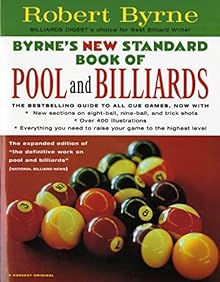

This is the first instructional book that I ever purchased. Who knew that a collection of table drawings and shot descriptions could be so funny?  A friend of mine had lent me a copy many many years ago. After reading only about 10 pages of it, I marched out and bought my own. You should too. (And while you’re at it, pick up Bryne’s second instructional book Advanced Technique in Pool & Billiards.)


Ever wonder how many possible ball arrangements there are in a straight-pool rack? Wonder no more. Mike Shamos, in this wonderful collection of the trivial and the historic, tells us. Here, you can learn about Kelly Pool, the Lambert Trophy, and the origin of the slang "weight." There’s plenty of pictures. As a hardback, it makes a perfect addition to any coffee table.


There is no more important novel related to American pool as The Hustler, by Walter  Tevis. Although not based on the life of Rudolf Wanderone, it nonetheless launched his media career. The book also led to the 20th Century Fox movie and the great renaissance for our sport during the 1960s. You also can read all about The Hustler, Minnesota Fats, the 1960s renaissance -- and the interrelation between the the three -- in my own book Hustler Days (referenced above).


MCGOORTY, A POOL ROOM HUSTLER
Danny McGoorty was a poolroom hustler, ladies’ man, and drunk. Robert Bryne recorded McGoorty’s life's story, and then used it to craft one of the most delightful and hilarious biographies ever written about an American cueist. This book also includes fun anecdotes about some of the most important players of the last century, including Mosconi, Fats, Welker Cochran and even Alfredo De Oro.


Willie Mosconi in his biography Willie’s Game co-authored with Stanley Cohen, speaks of Fats, Wimpy Lassiter, Irving Crane and several others. Speaking about Onofrio Lauri, Mosconi said: "You wouldn’t want him to be the guy standing between you and a championship. He was a sensational shot maker. If he got on a roll he could run out on you quicker than you could count the balls." Find the Kindle edition here.

THE BANK SHOT AND OTHER GREAT ROBBERIES

This is the autobiography of Minnesota Fats, co-written by Tom Fox and with an introduction by R. A. Dyer. It tells Fats' story is his own colorful words. A great fun read. Find it online here.

POOL WARS
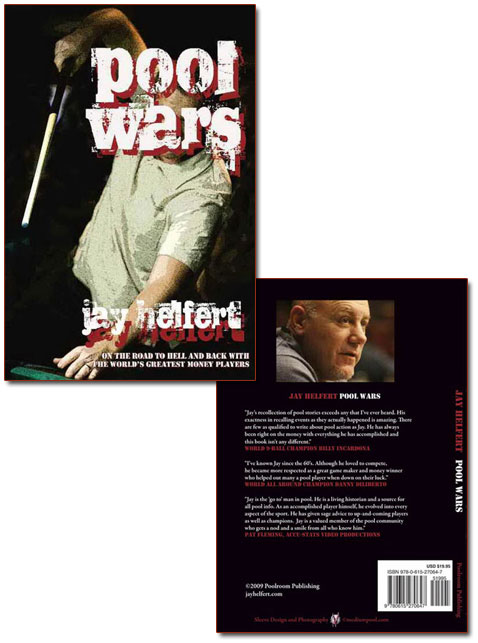
Jay Helfert's great book Pool Wars is subtitled "On the Road to Hell and Back with the World's Greatest Money Players." That's particularly apt, given that Helfert here has collected stories about Charlie the Ape, Ronnie Allen, Cuban Joe, and of course Minnesota Fats. Helfert writes about brawls and sleeping in pool rooms. He has some wonderful old pictures of a crazy skinny Earl Strickland and Buddy "Rifleman" Hall. A great read.


OTHER STUFF ...

If that special someone doesn't feel like reading over the holidays, here are a few non-book recommendations:


PHOTOS BY HELAINE GARREN
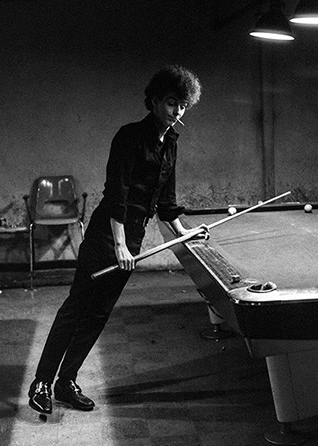
In 1970 Helaine Garren shot a series of images at Bensinger’s Pool Hall while she was a student at the Art Institute of Chicago. Garren's astounding photos have won rave reviews from Slate, the Chicago Reader and every pool publication you can think of. Buy prints directly from Ms. Garren at her website, www.helainegarren.com.
Call Pat Flemming over at Accu-Stats HQ and he'll recommend a good DVD. He's never steered me wrong once. Here's his number:  1-800-828-0397. You can also check out the website at accu-stats.com. 


The Hustler is the single-most important film ever made about our sport. For that reason alone, it deserves a revered sport in the DVD library of any lover of pool history.  The scenes between Paul Newman, as Fast Eddy, and Jackie Gleason, as Fats, are inspirational. The two-disk collector's edition also includes several extra documentaries, including one entitled “Swimming with Sharks” with commentary from Max Eberle and myself. So there’s that.


-- R.A. Dyer

Saturday, August 22, 2015

Ortmann, Ursitti Enshrined in Hall of Fame

Olivoer Ortmann, left,
 and Johnny Archer.
Courtesy Billiards Digest.
BROOMFIELD, COLO., Aug. 18, 2015 — (BCA Press Release) Two trailblazers in the pool world have earned election into the Billiard Congress of America Hall of Fame in 2015. Former world champion Oliver Ortmann of Germany and pool promoter/historian Charles Ursitti will be inducted as the 65th and 66th members of the sport's hall of fame, the United States Billiard Media Association announced today.

Ortmann, 48, of Hamburg, will enter the Greatest Players wing of the BCA Hall of Fame, while Ursitti, 68, who was born in New York City and now resides in Florida, will be honored for Meritorious Service. Both will be formally inducted during ceremonies on Oct. 29, 2015, at the Sheraton Norfolk Waterside in Norfolk, Va.

One of the most decorated players in Europe, Ortmann led the way for European players in the United States by scoring a shocking win over pool legend Steve Mizerak in the final of the 1989 BCA U.S. Open 14.1 Championship in Chicago. Ortmann went on to win the 1993 BCA U.S. Open, as well as three World Pool-Billiard Association world titles — the 1993 WPA World 9-Ball Championship and the WPA World 14.1 Championship in 2007 and 2010. The fiery Ortmann twice won the International Challenge of Champions (1997 and 2000), and captained Team Europe's winning Mosconi Cup squad in 2002. He also holds 14 European Pool Championship gold medals, 13 Euro Tour titles and was three-time European Player of the Year.

"This is a great surprise to me," Ortmann said, after being notified of his election. "It's great news. To be honest, I had stopped thinking about the hall of fame. Many years ago I thought it was possible, but after years went by, I thought my time had passed."
Charles Ursitti


Ursitti's career in billiard promotions began when he teamed with boxing promoter Big Fights, Inc., to produce the first-ever meeting of pool legends Willie Mosconi and "Minnesota Fats" in the "Great Pool Shootout." The 1978 ABC-TV Wide World of Sports production drew more than 10 million television viewers, and remains the most watched pool match ever aired in the U.S..

Ursitti went on to promote televised matches between Fats and Mosconi, eventually introducing modern day players like Allen Hopkins and Steve Mizerak into the productions. A seven-year run with CBS Sports Spectacular created opportunities to add more pro players, as well as female stars Jean Balukas and Loree Jon Ogonowski (Hasson).

Ursitti was responsible for pool's initial forays onto cable giant ESPN, where he promoted the "King of the Hill" series and the "Legends of Pocket Billiards" series.

In addition to being a promoter, Ursitti researched and created a database documenting the history of competitive pool and three-cushion billiards in the U.S., chronicling the sport from 1878 to present day. The database is available online for free at CharlesUrsitti.com.

"Needless to say, I'm thrilled to be elected into the BCA Hall of Fame," Ursitti said. "When I was first introduced to pocket billiards in 1976, I never dreamed of someday joining the greatest of the great. I consider myself really lucky with all of my promotions, and was honored to work with the legends of the sport, from Willie and Fats, Irving Crane and Jimmy Caras, to Mizerak, Hopkins, Mike Sigel, Jimmy Rempe and the rest. It has been a great trip, and I will cherish that forever."

Voting for the 2015 BCA Hall of Fame was conducted by the USBMA Hall of Fame Board, which consists of USBMA members, elected At-Large members and living members of the BCA Hall of Fame. Induction into the Greatest Players category is awarded to the player named on the most ballots. To be eligible for consideration in the Greatest Players category, a player a) must be 40 years old by Jan. 1 of the year of their induction; b) must have a professional playing career of at least 10 years; and c) must have recorded significant achievements in U.S.-based events.

A special Meritorious Service Committee recommends a person for consideration by the Hall of Fame Board. Induction into the Meritorious Service category is achieved if more than 50 percent of the Hall of Fame Board votes in favor of the candidate.

Ortmann, in his eighth year of eligibility, was named on 60 percent of the ballots, edging out fellow pros Gerda Hofstatter (44 percent) and Kim Davenport (37 percent). Belinda Calhoun, Shannon Daulton, Mary Kenniston, Rodney Morris and Vivian Villarreal each received votes on fewer than 25 percent of the ballots.

Saturday, June 13, 2015

American Pool History: A Timeline

Here's a work-in-progress timeline of American pool. Feel free to suggest more entries or corrections. One day I'll put this up more permanently on the regular poolhistory.com website.

1565
Pool makes its first appearance in North America, according to Frank G. Menke, a sports historian. A Spanish family brought it with them to St. Augustine, Florida. (Source: Life Magazine, Oct. 8, 1951).

1748
George Washington purported to have won a pool game. (Source: A Brief History of the Noble Game of Billiards, by Mike Shamos.)
 
1819
Michael Phelan, considered the father of American pool, is born in Castle Comer, County Kilkenny, Ireland.

1824
Michael Phelan and family join father John Phelan in New York City.

1827
The first slate tables appear. Previously, the playing surface of tables was cut from wood and then briefly with marble. However, marble was known to "sweat" in warm weather. [Source: Encyclopedia of Sports, by Frank G. Menke, 1939.]

1835
India wooden cushions are substituted for wooden cushions, which had been popular previously. The India rubber cushions provided a "spectacular bounce," according to sports historian Frank G. Menke. [Source: Encyclopedia of Sports, by Frank G. Menke, 1939.]

1850
Phelan, seen now as greatest player in the United States, publishes Billiards Without a Master.


1856
Phelan’s book, Game of Billiards, is published; he opens a room at the corner of Broadway and 10th, New York. It was considered the finest and most luxurious pool room in the world. He also publishes the first edition of Billiard Cue, the first billiard periodical.
 

1859
Jim Seereiter and Michael Phelan play in a four-day standing room only tournament in Detroit for an astronomical $15,000. Phelan won; in April Dudley Kavanaugh beats Michael Foley in another high-profile match, also in Detroit.

1863
Phelan retires from active competition; he also offers a $10,000 reward for anyone who can devise a suitable ivory substitute for the manufacturer of billiard balls. This effort has been credited with the eventual development of plastic. Dudley Kavanagh wins in a pro championship in Irving Hall, New York, June 1-9. He becomes second U.S. pool champion.

1865
Vulcanized rubber came into use for cushions, and remains the standard to this day. [Source: Encyclopedia of Sports, by Frank G. Menke, 1939.]

1865
On Sept. 7, Louis Fox and John Deery, joint holders of the world billiards championship of 1864, meet in Washington Hall, Rochester, New York, to decide the 1865 title. According to an account of sports historian Menke: "Fox, far in the lead and on his way to winning, found himself bothered by a fly, which, despite 'shooing,' continued to light on the cue ball. Fox, excitingly trying to chase the fly, miscued, and it was Deery's shot. Deery ran out the string to win the championship. The heart broken Fox rushed out of the hall to a river, leaped in, and was drowned." [Source: Encyclopedia of Sports, by Frank G. Menke, 1939.]
  
1869
Celluloid, the first industrial plastic, is discovered by New Yorker John Wesley Hyatt. Hyatt was attempting to come up with a substitute for ivory billiard balls, but his new substitutes sometimes exploded on impact.

1873
Jerome Keogh, inventor of straight pool and five-times billiard champion, is born.

1897
Keogh wins his first world championship.

1907
Eight ball is invented. The first three-cushion championship is established.

1910
The game of straight pool is invented by Jerome Keogh.

1911
The very first World 14.1 Tournament was held in 1911 and won by Alfredo De Oro. 

1912
Straight pool becomes the official tournament game of pocket billiards.
Alfredo De Oro

1913
Rudolf Wanderone, AKA Minnesota Fats, is born in New York on Jan. 13. Willie Mosconi is born in Philadelphia on June 27. The industry reports one of its best years, ever, for table sales.

1914
Dudley Kavanaugh dies in New York on March at age 80.

1916
Ralph Greenleaf competes in his first national championship tournament, held in October at Doyle’s Academy in New York. The 16-year-old Greenleaf was described as a “Boy Wonder” by the New York Times.

1918
Luther Lassiter is born.


1919
Greenleaf wins the first of his 13 world titles.

1929
Greenleaf, playing in Detroit, regains the title – his eighth. He defeats the scoreless Frank Taberski with a sensational 126-ball run.

Harold Worst, future three-cushion and pool champion, is born on Sept. 29 in Grand Rapids, Michigan.

1933
Willie Mosconi makes his national tournament debut.

Willie Mosconi
1941
Willie Mosconi wins the first of 15 world titles.

1948
The Billiard Congress of America is established.

1953
Jerome Keogh, winner of five titles and the inventor of straight pool, dies at age 80 on January 12.

1954
Harold Worst wins the world three-cushion title during an event held in Buenos Aires, Argentina.

1954
Willie Mosconi establishes the BCA-recognized straight-pool high-run record of 536 balls. He accomplished the startling feat in Ohio, on an 8 by 4 table.

1956
Willie Mosconi suffers a stroke.

1961
George Jansco conducts the first of his famous hustler tournaments in Johnston City, Illinois. The tournaments, which lasted about a decade, would eventually attract nationwide attention.

20th Century Fox releases “The Hustler.” The film, starring Jackie Gleason and Paul Newman, would reinvigorate the public’s interest in the sport.

Rudolf Wanderone begins making the fanciful claim that he was the real-life inspiration for the film’s Minnesota Fats character.

1963
Luther Lassiter wins the first of his seven Billiard Congress of America-recognized titles. He won many more non-sanctioned events.

1965
Three-cushion champ Harold Worst briefly conquers the world of pocket billiards with victories at the Las Vegas Stardust tournament in June, and in Johnston City in October and November.

1966
The Bank Shot and Other Great Robberies, the fanciful memoirs written by Minnesota Fats and
Philadelphia newspaper writer Tom Fox, gets published.

1969
George Jansco dies. Brother Paulie takes over management of Johnston City tournament.

1972
After reading newspaper reports of widespread gambling, federal agents on Oct. 26 raid the Johnston City tournament. The '72 tournament would be the last.

1978
Willie Mosconi and Minnesota Fats would play the first of several televised challenge matches. It was the most-viewed pool match in U.S. history.

1984
Earl Strickland wins the first of his historic five U.S. Opens.

1986
The Color of Money, a sequel to The Hustler, opens to favorable reviews. The film stars Tom Cruise with Paul Newman reprising his role as Fast Eddy Felson.

Allison Fisher
1993
Willie Mosconi dies in Haddon Heights, New Jersey on Sept. 16.

1995
Allison Fisher wins the first of her more than 50 Women's Professional Billiard Association titles.


1996
Minnesota Fats dies on Jan. 18.

2000-2001
Allison Fisher wins 8 consecutive major pro pool tournaments. 

2007
Shane Van Boening wins the first of his five U.S. Opens.

Monday, February 24, 2014

New Branch in the Fats Family Tree

Rudolf Wanderone — the many better known as Minnesota Fats — was the most famous pool hustler in American history. But how much do we really know about him?  Here’s a quick quiz.   But be advised:  some of these are trick questions. 

Which statements are true?

  1. The Minnesota Fats character in The Hustler, the novel by Walter Tevis, was based on Wanderone. 
  2. Rudolf Wanderone was born in 1913. 
  3. Rudolf Wanderone was married twice. 
  4. Rudolf Wanderone had no children. 
  5. Rudolf Wanderone had only one child, the famous rhythm and blues singer Etta James. 
  6. Rudolf Wanderone was a top-notch pool hustler.


Wanderone with daughter, Juanita.
This may come as a surprise, but all of these statements — with the exception of number 6, are in dispute.  This, despite what it says in Wikipedia and even what has been previously reported in my own books, like The Hustler and the Champ and Hustler Days. 

New information has come to light, information that I’ve detailed in recent edition of Billiards Digest.  We now know that Wanderone may not have been born in 1913, that he may have been married three times (not just twice) and that he had at least one child other than Etta James (and whether Etta James was his daughter remains an open question.) 

Here's the Cliff Notes version of what we now know: 

Wanderone had a long relationship during the 1930s with a woman named Lucy Blanche Maria Wood, who gave birth to a daughter named Neva Juanita. Lucy Blanche died in 1959. Neva Juanita died in 2010. Wanderone was almost certainly Neva Juanita’s father, and he also may have been married to Lucy Blanche. This is startling because Wanderone never publicly acknowledged any wife prior to Evalyn Grass, whom he married in 1941. His second wife (or third, depending on how you count) was Theresa Bell. Also, the timeline of his relationship with Lucy Blanche puts into doubt Fats' supposed birth year of 1913.

This new information comes to us from JustinVerhovnik, a hithertofore unknown grandson of Wanderone. Speaking to me for a January 2014 edition of Billiards Digest, Verhovnik said that the last time he laid eyes on his grandfather might have been in 1980, at about the time that Fats was divorcing Evelyn Inez. 

The story is long and drawn out, but I’ll try to relate more of it in a future blog post. You can also try to track down that January edition of Billiards Digest. Freddy Bentivegna likewise has included some detail in his new book, 'Encyclopedia' of Pool Hustlers.

 -- R.A. Dyer

Wednesday, June 15, 2011

PoolSynergy20: The Hustlers' Jamboree


I’ve been thinking a lot about Johnston City lately, especially given that the 50th anniversary of the Hustlers Jamboree is just around the corner.  For those who have never heard of it, the famous tournament started out as a tiny backwoods affair. Eventually, however, it grew into one of the most celebrated pool competitions in American history.   The first Johnston City event featured one-pocket only and almost no spectators. The last had nine-ball, straight-pool, one-pocket — and so much gambling that it was raided by federal agents.


I've written plenty about Johnston City over the last several years and as a consequence I've received several letters from folks who witnessed all the mayhem first hand.  For my PoolSynergy contribution this month I figured I'd turn those letters into gold. Our assignment was to describe what makes for a great tournament experience.  Who better to opine about this topic than folks who were present for America's great Hustler Jamborees?


But before we get going, let me first provide the Cliff Notes explanation as to why you should care about Johnston City. As noted previously, the first of these events was conducted in 1961. The last was in 1972. They were organized by the brothers George and Paulie Jansco and drafted off the popularity of The Hustler, the famous movie featuring Paul Newman and Jackie Gleason. The tournaments were noteworthy for many reasons, not the least of which was their elevation of nine-ball as the official tournament game of pool and because they helped to establish Minnesota Fats as America's most famous pool player.  The tournaments were also the first significant pool events to bring gambling out of the shadows. In fact it was the gambling —and the romance that surrounded it —that attracted the national media to Johnston City.  Whether for good or bad, this is simply a fact.
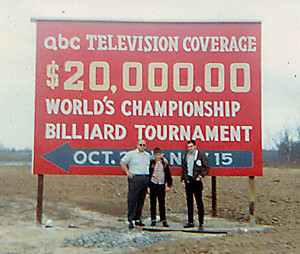
Johnston City Sign
Ross Parker Simons, center, with his Dad and unidentified man.

For those who are unfamiliar with the events, I've written a retrospective essay in this month's Billiards Digest. You can find it here.  There's also plenty of information about Johnston City in Hustler Days and The Hustler & The Champ.  I maintain a separate Johnston City blog with plenty of anecdotes, pictures and video about the event, which you can find here. And just above I've reproduced a video of the famous Minnesota Fats holding forth in Johnston City.

And now on to the letters:


          Gary Carlson writes that in 1965 or 1966 he piled into a Chevy Impala with a friend and the two drove down from Decatur, Illinois to Johnston City. And that's where he witnessed the famous "toilet brush" incident.


"I didn’t know what was going on — I knew nobody. The place was wall-to-wall packed. Difficult to see the action and it seemed somewhat disorganized. After watching endless 9-ball, we learned that the more interesting stuff was going on “out back.” I can’t recall (after all, this was about 45 years ago) if it was in a part of the same room walled off or a small building separate from the main room. I think we paid $5 for entry. It was north of the main building (which was like fifties deco), the latter which sat on the northwest quarter of the intersection. In any case, we were there only maybe a couple hours and the only memory I have was in this back room. I recall or heard of or saw “Jersey Red,” Eddie “Knoxville” Taylor, and “Big Daddy Warbucks” who I much later learned was Hubert Cokes. The match I recall was between Big Daddy and somebody else — I can’t recall who —seems like Taylor, but I’m not totally sure if Taylor or Red were even there that year and I just heard their names — but it was certainly Big Daddy. I also remember a LONG conversation about what the handicap would be. The game was going to be 8-ball and a race to something for $100 (good money back then). Now, instead of their bridge hand, Warbucks was to use his hat for a bridge and the other guy went into the toilet and returned with a big toilet brush." 

And here’s a note from John Rousseau, who read my Billiards Digest essay: 

“I am glad I went to Southern Illinois during that period and got to go to Johnson City every day. Grades sucked but it was quite an experience on life. I was there that night thanks to my deceit and larceny. The tickets for the broadcast were very expensive so I bought extra tickets for the regular tournament as they had no date or reference to ABC. We made a stink at the front door when they refused to admit us when Jim McKay yelled out, this is f------ live, let the a**holes in!”


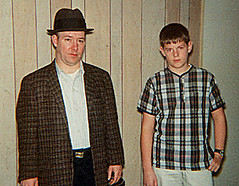
Ross Parker Simons in 1965 with Boston Shorty.
Ross Parker Simons was just 13 when he want to Johnston City. That’s a picture of him on the right and above. Here's what he has to say: 

“When I was 13, my father took me out of school is Wisconsin for a road trip to Johnston City and the Jansco Brothers 1965 tournament. I don't recall my mother's reaction, although she couldn't have been too mad as she packed a cooler with fried chicken and seven ounce bottles of Schlitz for the overnight drive. ... Although I don't recall much about the games, I knew good pool and remember that Harold Worst was impressive.  Looked like a haberdasher and shot like a machine.  I also liked to watch one pocket.  What's funny about the picture of Boston Shorty now that I look at it is his bored sneer... like beat it kid.  But I don't remember anyone being rude to me, even the imperious Daddy Warbucks.  Saw Handsome Danny Jones there and he was, in fact, quite handsome.” 

You can read more at the Johnston City blog, including some recollections of Karen Fox, whose husband co-authored the autobiography of Minnesota Fats. And if you were old enough to remember Johnston City, please drop me a line.


Before I sign off, I would like to leave you with this last thought. I believe it's high time that George and Paulie Jansco, the late promoters of Johnston City, were inducted into the Billiard Congress Hall of Fame. They've already been inducted into the One Pocket Hall of Fame, but now it's time for them to be honored by the BCA. If you agree (or even if you don't) send a note to Billiards Digest or your favorite pool magazine.

About PoolSynergy
PoolSynergy is an online collaborative effort by pool and billiard bloggers, in which each agrees to write about a single theme. PoolSynergy submissions are published simultaneously by each of the participating blogs on the 15th of every month. To read a list of the other fine contributions this month, check out Mike Fieldhammer's excellent Billiard Coach blog, which you can find here.

Friday, October 15, 2010

We Lose Again?

Pool Synergy 12: Pool & Television


Eddy & Charlie: "We lose again?"
Remember this scene? Fast Eddy is shooting pool. He’s been at it for hours, days even. At first Eddy wins big. But the Fatman keeps coming at him, keeps stroking balls, confidently, quickly, one by one. And eventually it all goes south for Eddy. Charlie the stakehorse sits dejectedly to one side. At Charlie’s feet are enough cigarette butts to fill a small pot hole.

The end comes miserably for Fast Eddy.

“We lose again, Charlie?” he asks, already knowing the answer.
“We lose again,” says Charlie.

We all face defeats. Some are trivial. Others sting. The worst are those that come when victory seems so tantalizingly close. These are the soul crushing defeats of come-from-behind candidates, of foreclosed homes and failed marriages. These are the overtime losses that keep the hometown team out of the Super Bowl, of finishing second best.

To me, that scene in The Hustler has always been a metaphor for just this sort of loss. This month's edition of Pool Synergy is devoted to what could be another: the very real possibility that pool will vanish from television.  Our Pool Synergy host predicts that soon, very soon, most American TV coverage for pool will be a memory. “It’s fairly safe to say that sometime within the next couple of years, the only billiards events we'll see here in the states will be trick shots and speed pool,” he writes.

His question: what impact will this have on our sport?

Quick review. Pool Synergy is a monthly collaborative effort in which online pool writers take on a single theme. This month our host, the anonymous founder of the Pool Cue News and Review blog, poses a question that I believe can be answered with but a single word. No essay required. The loss of TV coverage for pool would be disastrous.

But there is hope. Our anonymous host takes it as an article of faith that coverage will fade away. The eternal optimist in me rails against this proposition. I agree our industry has entered into some dark days. But I also believe the changing nature of television should open up new opportunities.

In 1978 Minnesota Fats faced Willie Mosconi in The Great Shoot-Out. It was the most watched pool competition in U.S. history, its rankings commensurate to some World Series games. (Read all about it in The Hustler & The Champ.) But that was the age before cable, TiVo and youtube. Those days are history. Today, television is granular, a medium in which giant ratings are almost unheard of, but where there’s space for relatively low-rated events like hot dog-eating contests, hot rod shows and poker. There’s never been a time with so much bad TV. Or so much good.

It’s been said that reality TV may presage the fall of Western Civilization. But what about reality TV devoted to professional pool? I opened the question recently to folks on my Facebook page. The response was enthusiastic. Said one reader: “It is incredibly frustrating to hear that the country's most popular sport (yes, pool is played by more Americans than football, baseball, soccer, basketball, or midget horseback racing) is lacking so heavily in TV coverage, yet there are shows about 'ice road truckers'? Ridiculous.”

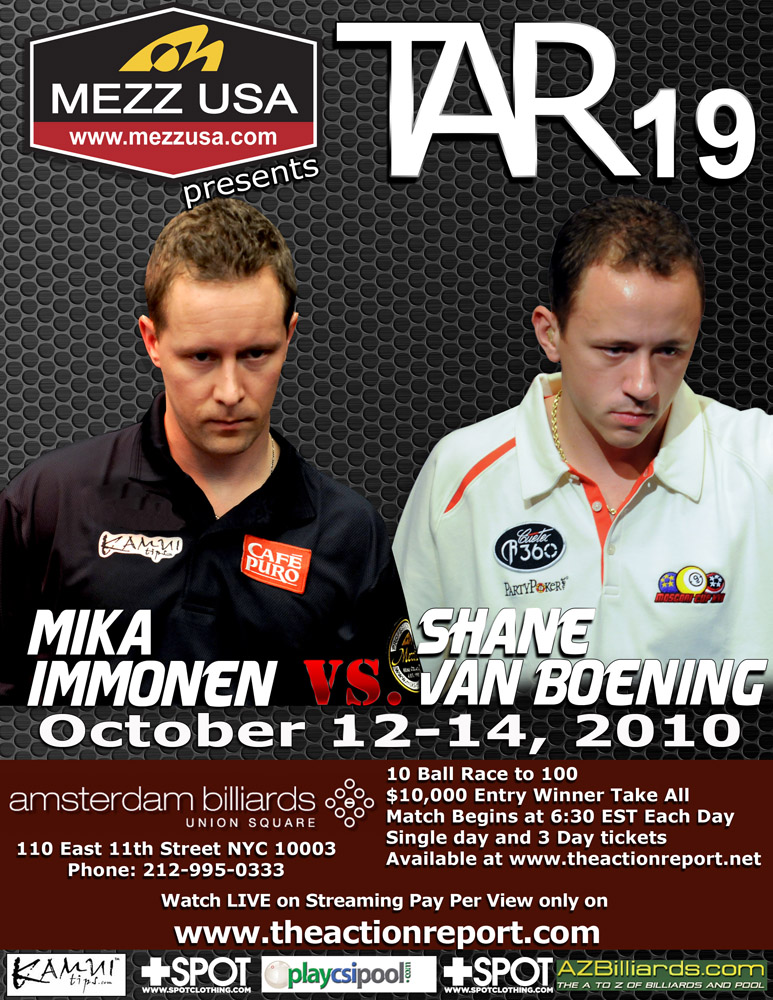
I’m also heartened to see what The Action Report is doing. The recent challenge match between Shane Van Boening and Mika Immonen provides an excellent road map for what could sell on cable. Same rules: $10,000 entry fee. Winner takes all. I imagine hand-held camera shots of serious looking men counting cash stacked in piles. As an added touch the TV producers could have the cash prominently displayed throughout the entire contest. The camera could pan back to it before each commercial break. A little bit of pre-match trash talk also would help.

Why wouldn’t that work? Am I dreaming? It would have the same feel as the Fast Eddy versus Minnesota Fats challenge match in The Hustler, but made for reality TV. It seems to me that such events would be relatively inexpensive to produce, and that venues would jump at the chance to host them because of the potential TV exposure. You could even pit a top woman pro against a top man. Bill it as the battle of the sexes. Imagine the drama. Imagine the pathos. And because of the granular nature of today’s TV audiences, the producers no longer need out-of-the-park ratings to declare success.

The down side would be that two-person events would limit exposure for other players. But such events could become a first step, something to help our sport rebuild in the new media age. In my dream world, broader coverage would follow. I agree with one reader, who wrote me recently that he wanted more “real” pool on TV – games like some straight pool, one pocket or some bank pool. “When I watch pool I want to see the skill, the heart, and the look of determination on the players faces,” he said.

The challenge match format could fit the bill.  The alternative is that our sport will continue its fall into irrelevance. The result, in a word, would be disastrous.

We lose again Charlie?

Wednesday, June 30, 2010

Memories of Minnesota Fats

 
Minnesota Fats was a fixture in southern Illinois during the 1960s, which was the heyday of the Johnston City tournaments and the pool revival I described in Hustler Days. The famous tournaments were created by George and Paulie Jansco, who are both members of the One Pocket Hall of Fame. I got to thinking about George and Paulie and Fats after receiving a letter the other day from Gary Carlson, a former graduate student from Southern Illinois. In it, Gary describes a chance encounter he had with Minnesota Fats. It was a small encounter, and yet the sort that appears to have taken on added meaning for Gary as he has learned more about Fats. That's because it quietly reflects some of the great qualities of Fats: he loved playing pool, he loved being around people and -- despite his hustler reputation -- there was a certain kindness about him.

Here's Gary's note:

From 1966 to 1969, I was a graduate chemistry student at Southern Illinois University in Carbondale, Illinois. I used to research my project from time to time during the wee hours and then go to a small hamburger place on the north side of Carbondale where they had 2 or 3 pool tables. I was usually the only one there and after a hamburger, I’d shoot some pool. I was only a fair player. One night (late 1968 – mid 1969), there was a guy sitting at the counter talking to the owner – I paid little attention to them. I had my hamburger, got a cue off the wall and began practicing.
Before long, the guy at the counter strolled over, watched a bit, and asked if I wanted to play a couple of racks. I said OK and asked if he wanted to bet a dollar a game. He laughed and said “A whole dollar”? I didn’t know if he was mocking me or couldn’t afford a dollar so I said “OK, how about 50 cents then”? He smiled and just said “Let’s play a bit for nothing and we’ll see what happens.” Well, he beat me several games with no trouble, shook my hand and left. The counter man said “Do you know who that was”? I told him I didn’t – and he told me it was Rudolph Wanderone – Minnesota Fats. I just said “Oh”. I had no idea who he was. Later, I saw a picture of him somewhere and realized who he was. Later still, I learned he was living not too far from Carbondale.
You asked for some remembrances of the man. That was mine. Recently I’ve read about him and from everything I understand, he was a pretty nice fellow.

Thanks to Gary. And, like he notes: I'm always looking for memories of the great ones. If you have one, send it in. If you'd like to learn more about Johnston City (or see another Johnston City video), check out my separate blog on the topic, which you can find here.


-- R.A. Dyer

Friday, May 7, 2010

Keith McCready, Jay Helfert and Pool Wars

I have to confess that my introduction to Keith McCready came in a movie theater. Touchstone Pictures released The Color of Money in 1986, the year I graduated from college.  I had just moved to Costa Rica and I remember going to see the film with a couple of other expats.  I really enjoyed the smoky rooms, thought Tom Cruise and Paul Newman were dynamite, laughed at Iggy Pop's cameo.

But one of the real revelations for me was McCready. I didn't know anything about professional pool at the time, but I could tell, instinctively, that McCready was the real deal. He looked like a pool player. McCready, in the film, had that vaguely side-arm stroke — not as side-armed as Greenleaf's, but neither like an amateur's. And McCready shot fast. By the end of The Color of Money I found myself rooting for McCready's Grady Season's character over Tom Cruise's Vincent.

My friends and I emerged from the darkness of the theater and immediately went hunting for a pool room. We eventually stumbled upon a place called Center Pool, where I proceeded to luck in a few balls.  I  may even have nerdishly uttered some McCready catch phrases. Oooh, the impossible dream. It keeps getting worse and worse, doesn't it? And it was precisely then that I became hooked on the game.  I remain hooked to this very day.

So why this trip down memory lane? Because I just picked up Jay Helfert's great book, Pool Wars. It's subtitled "On the Road to Hell and Back with the World's Greatest Money Players." The subtitle is particularly apt, given that Helfert here has collected stories about Charlie the Ape, Ronnie Allen, Cuban Joe, and of course Minnesota Fats. Helfert writes about brawls and sleeping in pool rooms. He has some wonderful old pictures of a crazy skinny Earl Strickland and Buddy "Rifleman" Hall.

But what got my quick attention was Helfert's recollections of stakehorsing McCready, and Helfert's experience with Martin Scorsese and The Color of Money. The author recalls how Scorsese came out to Barry Behrman's Q-Master billiards to research the film. It was there where the famous movie director discovered McCready as he was going head to head with Danny Medina in a backroom matchup. "They were playing a race to eleven for $1,500 and Keith was in full gear, laughing and joking with all the onlookers," recalled Helfert. "He was both brilliant and hysterical at the same time, and I could tell Scorsese was enthralled by him."

You'll have to get the book to read the rest. But know that McCready, at least very early in his career, was one of the most feared money players in the nation. In that sense he was not so different from his character in The Color of Money. That's what makes those scenes with him so cool. You can tell he's not faking it.

To pick up your copy of Jay Helfert's Pool Wars, check out his website at jayhelfert.com. And if you haven't seen the Color of Money, do so immediately.


-- R.A. Dyer

Friday, April 9, 2010

Childhood home of Minnesota Fats


At the upper left is a photograph of the apartment building where Minnesota Fats grew up. It's in upper Manhatten, the neighborhood of Washington Heights. I managed to track down its location and take this photo during a trip to New York City in the summer of 2005. I knocked on the door but nobody was home. I used the research from that trip in The Hustler & The Champ, which also describes Fats' rivalry with Willie Mosconi. Some years later I made contact with one of Fats' nephews, Doug Corwin (shown at upper right), whose mother Bertha Wanderone lived with Fats at this home. Doug also provided me some really cool childhood photos of Fats, which you can find by clicking through this Untold Stories column.

-- R.A. Dyer

Tuesday, March 23, 2010

Minnesota Fats: "A whole buck?"


Minnesota Fats with John Ogolini

I've reproduced here a charming letter I received a few years back from one Gary Carlson. Gary recalls unexpectedly bumping into the Fat One down in Johnston City. The picture above shows Fats with whom I believe is his friend John Ogolini. The picture was probably taken in Fats' home. I was given this photo during one of my trips to Southern Illinois to research Fats' life for Hustler Days.

OK, here's Gary's note:

"I was about 22 or 23 at the time (1964? 1965?) living in Decatur, IL. My friend, Bob Arthur mentioned there was a pool tournament in a town outside of Carbondale. So we got into his '58 Chevy Impala and away we went. I think we paid maybe $5 (???) to get in and then there was another charge to watch the action in the back room. I recall "Daddy Warbucks" playing someone else a handicap game. Warbucks used his hat as a bridge while the other fellow used a toilet brush from the restroom. They played $100 a game.

In 1966 I attended graduate school at Southern Illinois University and went to Johnston City once or twice for the tournament. I also played in a rock band which was hired for one weekend at the Jansco's place.

My major was chemistry and I would work sometimes until 1-2 am in the lab. Afterwards, I would frequently go to a small pool hall with 3 or 4 tables and good hamburgers. I was usually the only one there. I didn't really know much about the game or it's characters. One night a fat guy at the counter asked if I wanted to play a game since we were the only customers. He'd been laughing with the counter man and already knew I was very much an amateur. I said OK and he asked if I played for money. I said I guessed a buck would be OK. He said 'a whole buck?' I said 'If that's too much, how about 50 cents?' He laughed and said he'd try to fit it into his budget. He beat me pretty badly for 2 games and I quit a buck down. He bought me a hamburger and left. Later, the counter man told me it was Minnesota Fats and he lived nearby in Dowell, Illinois. It wasn't until some years later that I appreciated who he was."

-- R.A. Dyer

Sunday, March 21, 2010

Program from Minnesota Fats appearance


Here's a photo from Dale R. LeMieux of a flyer for an exhibition he saw with Minnesota Fats at the Pontiac Silverdome, then home of the Detroit Lions. The event was in the 1970s. Note: the top and side of the paper has Fats' autograph.

Dale writes: "The event was called The Billiard Bash and it was a benefit of the TRI-COUNTY EASTER SEAL SOCIETIES. This event featured Minnesota Fats as the one to beat. For a contribution of fifty dollars you were able to play him. I took my father there just to see Minnesota Fats ... (and) we were sitting in the audience watching, (and) I told my father that I was going to go down and talk to Fats. My father encouraged me to do so and said I probably would never get another chance.


As he was still standing there alone I went up to him and asked him about the movie THE HUSTLER. (Fats) talked to anyone who would listen. He talked for a while just like he had known me forever and I really enjoyed it because I had always really liked him (one of the few that liked him more than Mosconi). Then as another person started he continued to talk to me as the person ran some balls in their game of eightball.

Now it was Fats turn to shoot and when he got to the eightball a heckler starts in on Fats telling him he was no good at playing pool and that anyone can beat him. Fats says to the man "I'll tell you what I'll dooo. I'll bet you a thousand dollars that I will bank the eight three in the side." The man said no more. With no hesitation Fats banked the eight three rails into the side pocket. I think he said: "I'll just send old Elsie home anyway" and then he shot it in.

After the exhibition we were still sitting in our seats when Fats and a few big guys he had around him came back (to where we were) and ... as he was walking by he reached down and tapped me on the shoulder and said to me: "I will see you later Dale." That was the last time I saw Rudolph Wanderone in person.

Personal note... I have always disliked the way people (pool players) at least in this area after Fats got older and sicker tell of how they beat him. It also happened in this area with a great player I knew Cornbread Red ( Billy Burge). Now that he is gone it seems that everyone beat him. I know that I never beat him and he was one of the greats, He was colorful and liked to talk as well. I for one will miss both players."


-- R.A. Dyer

Memories of Minnesota Fats

Reader Ron Allday sent me this note back in 2007. It was posted on an old blog that I'm in the process of trashing.

"I was in the Le Cue in Houston one night back in the 70's. Fats had come in to do an exhibition. Fats was shooting and gabbing, and mentioned he had done an exhibition for the Houston Astros, and let one of the players win the first game of a race to three. Some kid in the crowd popped off then that 'If that had been me I'd have quit after one game so I could say I beat the Fat Man.' It got quiet, and Fats put his stick down, walked over and got right in the kid's face. He said 'Sonny Boy, wouldn't have done ya' any good. Nobody woulda believed ya!' Jersey Red was there, too. He told me he wouldn't walk across the room to watch Fats shoot, but he'd drive across the country to listen to him talk. That was a memorable evening."


-- R.A. Dyer

Friday, February 5, 2010

Fats vs. Mosconi: The Great Pool Shoot-Out

You read it about it The Hustler & The Champ. Here's the video proof of the most watched pool match in U.S. history. Picture and sound quality is pretty lousy, but it's the only copy out there that I have come across. You can read about the pool match in detail in my book (that's it there to the right). The famous televised pool match was put together by pool promoter Charles Ursitti and the guys from Wide World of Sports.-- R.A. Dyer

Friday, January 29, 2010

Fast Eddy No. 5 Celebrates 101st

Pool Shark "Fast Eddy" Halliday celebrated his 101st birthday this week. "That's right (I was) a pool shark," Halliday told a newspaper reporter. "(And) I was pretty good. I took on all comers."

Halliday was featured on the occasion of his birthday in a recent article in the Longview (Texas) News-Journal. He has made Longview his home for the last quarter century.

To Halliday's credit, the old hustler never claims to have been THE Fast Eddy -- that is, he never claims that he was the template for the "Fast Eddy" Felson character from The Hustler & The Color of Money. Several others have made that claim or allowed it to be suggested of them.

Over the years I've come across any number of journalistic references to random Fast Eddies. I won't claim that all of these guys proclaimed they were the real Fast Eddy, although some of them did.

*There's Ronnie "Fast Eddy" Allen, the One-Pocket legend from California.

*There's Louisiana's Ed Taylor, the Bank-Pocket genius also known as the Knoxville Bear.

*There was Ed Parker from Texas.

*There's California's Ed Pelkey who died in 1983.

And of course Rudolf Wanderone made quite a career for himself claiming that he was the original Minnesota Fats. Walter Tevis, the author of The Hustler, said there's nothing to any of these claims. Speaking to columnist Ray McHugh of the Pittsburgh Press in 1983, Tevis said: "I'm weary of explaining this. Nobody believes you when you tell them you invent your own characters."


-- R.A. Dyer

Tuesday, December 15, 2009

Parica, Fats inducted into One Pocket HOF

This just in from the One Pocket Hall of Fame: Minnesota Fats and Jose Parica have been selected to become its two newest inductees. The organization also has inducted Chicago's Glenn "Piggy Banks" Rogers for his prowess in bank pool.

The One Pocket Hall of Fame is sponsored by Onepocket.org. Unlike the Billiard Congress of America Hall of Fame (the two endeavors are in no way affiliated) the One Pocket Hall of Fame proudly honors players known for their heart in high-stakes action matches. As noted in the One Pocket Hall of Fame release: "Everyone knows that pool has always had two very different cultures of competition – the establishment culture of tournaments, wholesome recreation and industry endorsements on the one hand, and the after-hours culture of gambling and hustling on the other hand. It is the mission of the One Pocket Hall of Fame to honor and remember those great players and great games that represent the legacy of Pool in Action."

As such, the induction of Fats was a great choice. A dangerous one-pocket player during his prime, Fats is also remembered as a great promoter of the sporting life associated with pocket billiards. His real name was Rudolf Wanderone. He became famous after the release in 1961 of The Hustler, the film starring Jackie Gleason and Paul Newman. He was also an important participant in the early Johnston City tournaments.

Parica, a former Derby City champion, has gained a reputation as one of the nation's most formidable one-pocket players. Known as "Amang" by his friends (tagalog for "father"), Parica was among the first from pool's so-called "Philippine Invasion." His after-hour match-ups with fellow legend Efren Reyes have become the stuff of legend. That's a picture at the top of this post of Parica (courtesy Steve Booth at Onepocket.org).

The third inductee, "Piggy Banks," emerged as one of Chicago's leading bank players. And that's from a city known for great bankers.

In addition, the Hall of Fame also will present its Lifetime Pool in Action award to Seattle's Harry Plattis. According to the Hall of Fame release: "Harry’s name has been synonymous with pool action for more than forty years. Even as he built a successful law career he has maintained an impressively competitive game and a willingness to mix it up with champions for big money, both as a player and a backer."

The ceremony will take place at the Derby City tournament, during a Jan. 26 banquet hosted by one-pocket Hall of Famers Grady Mathews and Freddy "The Beard" Bentivegna. The Horseshoe Casino in Elizabeth, Indiana hosts the tournament. Advanced tickets are available through the OnePocket.org web site. Any remaining tickets will be available at the Derby City Classic.

-- R.A. Dyer

Sunday, December 13, 2009

PoolSynergy: Billiards Tales and Folklore

This is the second of a series of posts written in coordination with other online pool writers. It's part of the Pool Synergy project hosted this month by Samm Diep's pooltipjar.com. Look for more installments in the future.

Our PoolSynergy topic this month is “Billiard Tales.” As part of my contribution I'm giving everyone an assignment. Find a poolroom in your area popular with the old timers and sidle up next to a few of them at the bar. It’s important that you find at least two or three of these guys sitting together. Four is even better. And I’m not talking about the middle-aged guys, I’m talking about the really old ones, the guys who have been around the pool halls 30 or 40 years at least.

Buy them a beer if you want, or just sit quietly. And then wait.

I guarantee you that within the first half hour you’ll start hearing stories of who took whom and for how much, or about the time some shark came to town, or about the big score by the local champ. Some stories will be verifiable, others not so much. I’ve even heard deadly serious tales of the supernatural.

To me, the form of these billiard tales is just as interesting as the content. That is, it's not what the stories are about, per se, but how they're communicated. The oral tradition is key. Most of the great old stories never get written down, never appear in newspapers -- and they grow in the telling. These stories pass from older players to younger ones, and as long as the community remains intact -- e.g., as long as the poolroom remains standing and the same men and women continue to frequent it -- the legends remain alive.

Now here's a thought. Bear with me, but I think it's true. I believe these boozy recollections have a lot in common with the colorful stories that might get told by village elders around a camp fire. Listen to the old timers and you'll hear tales of heroes and villains and especially tricksters. Oral tradition (according to my quick research on Wikipedia) refers to the "transmission of cultural material through vocal utterance.” The oral traditional also has long been associated with folklore. I would argue that many of the stories told by old-time pool players are part of the folkloric tradition, but of an urban sort.

Some of my favorite Billiard Tales involve Minnesota Fats. In them Fats might be razzing an event promoter about the dress code, or cracking wise about the straight-laced "fun players," or gleefully robbing a tournament player during a high-dollar gambling session. These stories typically pits Fats against some symbol of the conservative billiards establishment.

As is the case with many trickster stories from folklore, Fats in these stories becomes an amoral and comic figure confronting the hypocrisy of the status quo. The billiards establishment would portray our sport as a clean-cut endeavor where no one ever gambles and where the dress code is strictly enforced. Minnesota Fats would portray it for what it really is. As a classic trickster, Fats confronts established authority, lies, and can act in amoral ways. But he also becomes an ironic symbol of truth.

I used to live in San Jose, Costa Rica. I remember hearing stories there about a hustler named “Pichitas” -- about how he would send well-dressed businessmen packing, or how he created this great shot from nowhere, or how he became a master of the 5 by 10s. I even remember the Pichitas "origin myth" -- in that stories were told about how he got his name (which, by the way, translates to “Tiny Dicks.”) These stories were told with something approaching reverence and at first I thought they were specific to Latin America. But I later discovered that they could have just as easily been told about Wimpy Lassiter or Jersey Red or U.J. Puckett. In each case, the players are portrayed as heroic or trickster figures, and in each case the stories are passed along directly through word of mouth. I also recognized in each case messages about the "culture" of the pool room, in that they would communicate lessons about such matters as gambling etiquette, attach value to certain sorts of figures and heap ridicule on others, and define the language common to members of the "tribe".

And so that brings us back to this month's assignment. Go sidle up to the bar, order a drink, and spend some time listening to the old timers. If you hear something good, remember it, and pass it along. Better yet, send me your stories and I'll post them up on this blog or use them as a fodder for a future Untold Stories column.

Some of the best Billiard Tales have never been written down. This puts them at risk for being lost forever. But through the magic of the Internet, we can now share the wisdom of our village elders with the world.

You can read a bit more about these ideas in The Hustler & The Champ. If you have your own old time story, send it to me at
hustlerdays@yahoo.com.