Showing posts with label Wimpy Lassiter. Show all posts

Sunday, April 2, 2017

St. Elmo: Favorite Haunt of Wimpy Lassiter


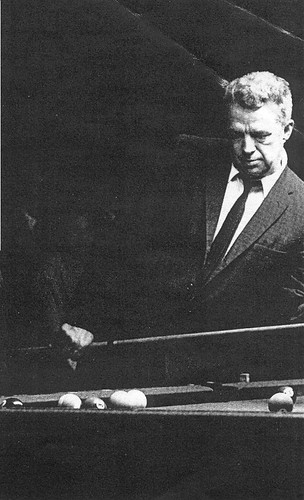
This photo of the St. Elmo pool hall in Norfolk, Virginia. It was the favorite haunt of the world famous Wimpy Lassiter and also was featured in the book, Hustler Days, which is available from online retailers. It was taken by photographer Harry C. Mann and is available under common licensing from the Library of Virginia.

You also can learn more about the pool hall and Lassiter in the book, Hustler Days, which is available online.

Former sailor John Pizzuto was a St. Elmo's regular during the late 1960s. He sends us this brief recollection of his time there.

"Most of the players had a nickname, mine was Sailorboy. I kept Sam Bass in beer money Saturday afternoons, getting straight pool "lessons" from him. Carolina kept my cue behind the bar when we were out to sea. I played golf and straight pool with Old Red. He was pretty old and towards the end of my time there, he didn't come in very often. At the time he seemed like he was in his 70s. Some of the other regulars were Cab Driver, Onion Head Red and a pretty good player named Cash McCall. He ran a bartending school. 

One Saturday afternoon, I was practicing alone. One of the regulars egged me into asking "that old man in the chair" to play some nine ball. I walked over and asked, but he politely declined. I awkwardly offered him a spot. He shook his head. As I walked back to my table, the regulars all started laughing, asking me if I knew who that was. By then, I figured it must be Wimpy. I had heard he came in from time to time, but I had never seen him. I walked back over to where he was sitting and offered my hand in apology. He shook it with his left."

Saturday, December 12, 2015

HOLIDAY GIFT GUIDE: Books & More


Does that special pool lover in your life already own 20 instructional books? How about going another direction this year and getting him or her the gift of pool history? As we like to say at poolhistory.com, a sport without history is a sport without consequence. But there's plenty of literature out there to help fill the gaps. I've included some of my favorite selections (including a couple of my own books) plus some video resources and other material.  You can find each of these potential stocking stuffers online. Keep reading for all the details.


THE HUSTLER & THE CHAMP
R.A. Dyer’s book, The Hustler and the Champ, chronicles the long colorful rivalry between pool’s greatest tournament player and its most colorful hustler. Read more about The Hustler and the Champ at the poolhistory.com website. Purchase the book on Amazon.


This critically acclaimed book tells the story of pool in the 20th century and of the 1960s revival brought on by 20th Century Fox film, The Hustler. The book profiles some of the game’s greatest players, including Rags Fitzpatrick and Harold Worst.  Purchase the book on Amazon.


3 GREAT BOOKS BY THE LATE, GREAT FREDDY "THE BEARD"


Freddy "The Beard"  Bentivegna was an old-time pool hustler, a banking expert and one of our sport's great storytellers. I was sorry to hear of his passing in 2014. I've highlighted three of his books here. Each is well worth the investment. You can purchase them directly from his website, www.bankingwiththebeard.com.


THE “ENCYLOPEDIA”  OF POOL HUSTLERS
This reference work is not anything you’ll ever read from start to finish — at least, not in any disciplined way — but it’s a book you’ll want to have around your nightstand or in The Brown Study. It’s chock full of quick and quirky anecdotes about players both famous and obscure (mostly obscure), all seasoned with Bentivegna’s aromatic brand of BS.


BANKING WITH THE BEARD
Freddy's first book, "Banking With The Beard," includes a banking formula that incorporates the concepts of acquired english and cue ball english. It's 200 pages long.  The tips are invaluable.


GOSPOOL OF BANK POOL

Freddy's second book, "The GosPool of Bank Pool," also runs about 200 pages long -- but about half of it is devoted to colorful anecdotes. I found myself laughing out loud as I read about Minnesota Fats, Eddie "The Knoxville Bear" Taylor, Cornbread Red and Harold Worst. 


AND MORE BOOKS...


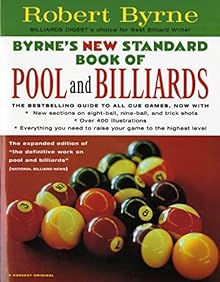
This is the first instructional book that I ever purchased. Who knew that a collection of table drawings and shot descriptions could be so funny?  A friend of mine had lent me a copy many many years ago. After reading only about 10 pages of it, I marched out and bought my own. You should too. (And while you’re at it, pick up Bryne’s second instructional book Advanced Technique in Pool & Billiards.)


Ever wonder how many possible ball arrangements there are in a straight-pool rack? Wonder no more. Mike Shamos, in this wonderful collection of the trivial and the historic, tells us. Here, you can learn about Kelly Pool, the Lambert Trophy, and the origin of the slang "weight." There’s plenty of pictures. As a hardback, it makes a perfect addition to any coffee table.


There is no more important novel related to American pool as The Hustler, by Walter  Tevis. Although not based on the life of Rudolf Wanderone, it nonetheless launched his media career. The book also led to the 20th Century Fox movie and the great renaissance for our sport during the 1960s. You also can read all about The Hustler, Minnesota Fats, the 1960s renaissance -- and the interrelation between the the three -- in my own book Hustler Days (referenced above).


MCGOORTY, A POOL ROOM HUSTLER
Danny McGoorty was a poolroom hustler, ladies’ man, and drunk. Robert Bryne recorded McGoorty’s life's story, and then used it to craft one of the most delightful and hilarious biographies ever written about an American cueist. This book also includes fun anecdotes about some of the most important players of the last century, including Mosconi, Fats, Welker Cochran and even Alfredo De Oro.


Willie Mosconi in his biography Willie’s Game co-authored with Stanley Cohen, speaks of Fats, Wimpy Lassiter, Irving Crane and several others. Speaking about Onofrio Lauri, Mosconi said: "You wouldn’t want him to be the guy standing between you and a championship. He was a sensational shot maker. If he got on a roll he could run out on you quicker than you could count the balls." Find the Kindle edition here.

THE BANK SHOT AND OTHER GREAT ROBBERIES

This is the autobiography of Minnesota Fats, co-written by Tom Fox and with an introduction by R. A. Dyer. It tells Fats' story is his own colorful words. A great fun read. Find it online here.

POOL WARS
Jay Helfert's great book Pool Wars is subtitled "On the Road to Hell and Back with the World's Greatest Money Players." That's particularly apt, given that Helfert here has collected stories about Charlie the Ape, Ronnie Allen, Cuban Joe, and of course Minnesota Fats. Helfert writes about brawls and sleeping in pool rooms. He has some wonderful old pictures of a crazy skinny Earl Strickland and Buddy "Rifleman" Hall. A great read.


OTHER STUFF ...

If that special someone doesn't feel like reading over the holidays, here are a few non-book recommendations:


PHOTOS BY HELAINE GARREN
In 1970 Helaine Garren shot a series of images at Bensinger’s Pool Hall while she was a student at the Art Institute of Chicago. Garren's astounding photos have won rave reviews from Slate, the Chicago Reader and every pool publication you can think of. Buy prints directly from Ms. Garren at her website, www.helainegarren.com.

Call Pat Flemming over at Accu-Stats HQ and he'll recommend a good DVD. He's never steered me wrong once. Here's his number:  1-800-828-0397. You can also check out the website at accu-stats.com. 


The Hustler is the single-most important film ever made about our sport. For that reason alone, it deserves a revered sport in the DVD library of any lover of pool history.  The scenes between Paul Newman, as Fast Eddy, and Jackie Gleason, as Fats, are inspirational. The two-disk collector's edition also includes several extra documentaries, including one entitled “Swimming with Sharks” with commentary from Max Eberle and myself. So there’s that.


-- R.A. Dyer

Sunday, August 30, 2015

Man of Many Talents: Hall of Fame Inductee Charles Ursitti Known for Marksmanship

Did you know that Charles Ursitti, recent Hall of Fame inductee and a key figure in the book The Hustler & The Champ, was also a highly competitive sharpshooter? He learned about guns from his father, and then went on to shoot both in public exhibitions and in tournaments.

Charlie was the driving force behind the Great Shoot-Out, the famous 1978 televised match between Minnesota Fats and Willie Mosconi. You can read more about that in The Hustler & The Champ, published by Lyons Press. Charlie also has amassed one of the greatest repositories of historical pool and billiard statistics in America.  You can see those stats online, for free, at charlesursitti.com.

The New York Newsday article shown above describes Ursitti's victory in the individual shooting competition at the Charlton Heston Celebrity Shoot in California, back in July 1993. That's Heston himself in the photo, in the middle, and the actor Paul
Sorvino on the left. Charlie is pictured at right.

According to the article: "Ursitti's dead-eye shooting stole a large part of the show. 'It was
unbelievable,' said Brendan Banahan, Ursitti's teammate and publisher of Field and Stream magazine. 'I'd never seen anyone shoot as confidently and accurately.' Ursitti earned a perfect score in all four events of the handgun competition and recorded the highest score of 100 participants."

Ursitti is to be officially enshrined into the Billiard Congress Hall of Fame during a ceremony in October. Wimpy Lassiter, the late hustler and fellow Hall of Famer who figured prominently in Hustler Days, also was an expert marksman.

-- R.A. Dyer

Friday, July 15, 2011

PoolSynergy21: Questions for La Voyante!

 Dear La Voyante, the Mysterious: 

I an older player, and I have been away from pool for a very long time. How can I improve my game after such a long lay-off? I'd like to get back up to speed, but I don't even know where to begin! With your mysterious arcane abilities, I know you can help me.

 Signed,
 Rufus from Texas


Funny you should ask, Rufus. As it turns out, the very same question has been posed for the 21st edition of the PoolSynergy project, the online collaborative effort in which pool bloggers write about a single topic. As a fond reader of PoolSynergy and a devout practitioner of the arcane arts, I, La Voyante the Mysterious, have bent my entire will to answering this very excellent question.

Joe "The Meatman" Balsis
The stars tell La Voyante that the answer you seek is in the possession of one Joe Balsis, a professional pool player. The stars also tell La Voyante that Mr. Balsis has unfortunately been dead since 1995, so getting instructional advice from him may be a challenge.  However, no man, living or dead, is better suited to seek it than La Voyante!

Why is Joe Balsis, the one they call "The Meatman," the key to your question? It is simply this: Mr. Balsis was a national champion as a young boy, abandoned the game shortly after World War II, but then came back 17 years later to become champion again. Historians tell La Voyante that Mr. Balsis holds the American record for the longest layoff in championship pool. 

La Voyante is a great man, but also a humble one, and so he turns to the expertise of George Fels, the Billiards Digest columnist, for more information about the one they call The Meatman. La Voyante has learned from reading Mr. Fels' expert columns that The Meatman was the son of a poolroom owner from Minersville, Pennsylvania, won the Philadelphia City Boys Championship in 1932 at age 11, and then went on to win four consecutive National Junior Pocket Billiard Titles. So famous was young Joe Balsis that his picture appeared in The New York Times, right next to fellow pool stars Ralph Greenleaf and Willie Hoppe.

George Fels
But Joe Balsis abandoned the game shortly after World War II. Instead of pool, Joe Balsis went to work for his father-in-law's meat business.  “Thus began the professional game’s longest known layoff,” Mr. Fels tells us.  The Meatman earned both a good living and his troubling descriptive nickname during these years.

Another of La Voyante's Favorite Books
It was after the birth of his third child that Joe Balsis returned to pool. The sport was gaining again in popularity, largely the result of the Paul Newman film, The Hustler, which was released in 1961. (You can read about the renaissance sparked by that book in one of La Voyante's favorite books, Hustler Days.) In 1964 a Philadelphia room owner sponsored Joe Balsis for the prestigious Billiard Room Proprietors Association of America tournament, held in New York. It would be the first big tournament after his comeback. The Meatman finished with a 7-6 record, just passably good, but then would go on to win the BRPAA tournament outright the following year. Joe Balsis could now claim junior and world championships an incredible 32 years apart.

In 1966 Joe Balsis placed second to Irving Crane in the Billiard Congress of America’s inaugural straight pool U.S. Open in Chicago, won the Johnston City all-around, and took out Willie Mosconi during a high-profile competition in California as Mosconi was attempting his own return to pool. Mr. Balsis during this California event beat Mr. Mosconi in the finals and also pocketed an average of 22 balls per inning during the tournament, shattering an old record held by Mosconi. (You can read more about this tournament and about the prickly Mr. Mosconi in The Hustler & The Champ, another of La Voyante's favorite books.)

La Voyante's Pool Instructional Device
According to Mr. Fels: “In the first 28 months of his professional pool career, Balsis competed in 10 major tournamens, wining five, second once, two fourths, two fifths. Overall, between 1965 and 1975, he may well have been the world’s best player … His peers shuddered at the thought of taking him on just as they once had been in awe of Mosconi.”

Mr. Balsis was inducted into the Billiard Congress Hall of Fame in 1982.

So, Rufus, back to your question: How should one train after a long lay-off from the sport? Only Joe Balsis can know for sure. After all, no man, dead or alive, has made such a come back as The Meatman. For your answer, La Voyante shall continue to consult his Ouija board. When La Voyante hears from the great beyond, so shall you!

About PoolSynergy
PoolSynergy is an online collaborative effort by pool and billiard bloggers, in which each agrees to write about a single theme. To read a list of the other fine contributions this month, check out PoolBum's excellent blog, which you can find here.  If you have a question for La Voyante or a suggested topic for the PoolSynergy project, please send it to R.A. Dyer, care of this email address. 

Sunday, May 15, 2011

PoolSynergy 19: The Norfolk Glory Years

The Greatest Pool Town In American History?
Wimpy Lassiter

There are pool meccas and then there are pool meccas. Our PoolSynergy task this month is to pick one and write about it. But as I deal with history here, for my essay I’ll reach back into time and describe one of the great pool towns of the past.

I’m not talking Johnston City.  I’m not talking Los Angeles or Chicago. I’m talking about Norfolk, Virginia, during World War II: the town where Wimpy Lassiter was king. Norfolk was the home of the the famous Tuxedo, the town’s main action room. The Tuxedo was located downtown, on City Hall avenue. But there was also St. Elmo, with the flashing ball and stick above the door, and the Monroe and the Eureka.

I describe Norfolk at great length in my book Hustler Days, which chronicles Wimpy Lassiter's rise to greatness there. Norfolk was a navy city, and the sailors and shipbuilders flooded in during World War II, tripling the city's population. This meant: suckers. And so the sharks came too, men like Andrew Ponzi, Johnny Irish, Rags Fitzpatrick, Earl Shriver, New York Fats, Joe Canton.

And of course there was Lassiter, remembered today as one of the greatest nine-ball players in American history. He won and lost several small fortunes in Norfolk. An old friend of Lassiter’s, Rusty Miller, explained to me how the former Coast Guard man would skip off the boat at night, looking for action.  “All these people were making bucketsful and bucketsful of money,” said Miller, who was in his teens during the war years.  “They had so, so much money.  I was used to playing for 50 cents or $1 nine-ball. I remember walking into a poolroom and I saw Wimpy playing $250 a game – and this was 1944! I was totally flabbergasted.”
          
Lassiter was stationed on a Coast Guard vessel in Norfolk.
Miller remembered as many as six poolrooms in Norfolk, all within walking distance of each other. There were payoffs to the cops and wide-open bookmaking, he said. "The Coast Guard pay started at $21 a month, but Wimpy would pay $50 a night (for a shipmate to take his duties). The kids on the ship would line up to stand in for Wimpy (so he could leave the ship and gamble). At a salary of $21 a month, that $50 per night looked pretty good."

Norfolk was also the home of the Commando Club, an illegal nightspot owned by a well-to-do gambler named Whitey. Whitey would boast that he easily cleared $10,000 weekly off his entertainment ventures. And it was money Whitey was willing to gamble. “All the pool players migrated to Norfolk to play Whitey pool,” said Miller. “I remember seeing him lose $22,000 in a single day. And the next day, the same guy (who beat Whitey) lost most of that money. I saw every famous pool player known to man come to Norfolk to play Whitey.”

More about Norfolk in Hustler Days.
It was also against Whitey, in Norfolk, that Lassiter played what has been described as one of the greatest money matches of all time. As Miller remembered it, Lassiter had just beat Whitey of $5,000 playing nine-ball. “Whitey quit him, and then when he quit, Whitey’s throw-away line was: ‘How would you like to play one game of straight pool for $5,000? Just one?’
        
 “Wimpy looked at him and said, ‘Well, yeah’ – and they played one game of straight pool for $5,000.” The game was set, Wimpy gave Whitey a giant spot ... and then Wimpy managed to sink just eight balls. Whitey, meanwhile, got to 98. That is, the club owner was just two points from victory. And that's when Wimpy got back to the table. “And then Wimpy ran 82 and out,” said Miller. “I watched it with my own two eyes.”

About PoolSynergy
PoolSynergy is an online collaborative effort by pool and billiard bloggers, in which each agrees to write about a single theme. PoolSynergy submissions are published simultaneously by each of the participating blogs on the 15th of every month. To read a list of the other fine contributions this month, check out the JB Cases blog, which you can find here.

Thursday, September 30, 2010

Wimpy Lassiter's World War II records

[You can also read this post and more at the poolhistory.com website]
Wimpy Lassiter spent most of World War II on one of three Coast Guard cutters, all of which operated just off Norfolk. The Navy subsumed the Coast Guard during the war, and the cutters were tasked with picking men from the burning wreckage of German u-boat attacks. By all accounts, Lassiter made for a terrible sailor. Eyewitnesses tell us that he was sick most of the time. Lassiter himself told a friend that he wanted to crawl off and die because of the motion sickness.

While researching Hustler Days I reviewed Lassiter's military records and put together a timeline. I've reproduced it below. You might come across a few of my typos here and there because this is pretty much how the timeline appeared in my raw, unedited notes. I find the entry for May 8, 1943 particularly instructive. The military records for that day indicate that Wimpy neither desired a job, nor had requested to attend a service school. This shouldn't come as a surprise, as Wimpy already was making himself rich in Norfolk. He was said to have amassed several hundred thousand dollars in pool winnings in the  pool halls during these years -- and remember, this was the 1940s. Under such circumstances, why would he want to attend a service school?

Lassiter would go on to win eight major 14.1 titles during the 1960s -- and that's not counting his four straight pool victories at Johnston City. He also picked up five nine ball championships in Johnston City, a Johnston City one-pocket victory, and he won the Johnston City all-around championship five times.

I've also posted this time line of his early years in my separate Wimpy Lassiter blog. You can find it here.


Total time in Service: Three years, 10 months, and 7 days.
Spent time aboard vessels: CG 83511, CG 74307, CG 74306


September 1934 - Dec. 14, 1937
Attended high school. In letter by Edgar E. Bundy, Superintendent of Schools to recruiting board, Wimpy was said to have left school for work.

1938-1940
Employed by J.C. Connery, Burgess Street, Grocer man (according to Coast Guard application), drinks intoxicating liquors on ``rare occasion,’’ never convicted of crime.

April 2, 1941
Walks into recruiting station, Norfolk, to sign up. Signs special temporary enlistment contract. Employment was shown as clerk; enlisted or three years; described as 22 years old, 5’10’’, weighing 136.5, with blue eyes, black hair, fair complexion,

April 22, 1941
Receives physical examination that reports: 20-20 vision, not color blind, hearing normal, height 70 inches, weight 136.5 pounds, chest (exhale) 34; (inhale) 31 pulse before exercise 84, after exercise 100, after three minutes 84. Tonsillectomy, 1931. Age 22 years, 6 months.

April 25, 1941
A form he fills out shows no experience in any trade.

May 1, 1941
Accepted for service in Norfolk, VA. Receives clothing bounty pay of $112.75 Immediately transferred (at 2:30 p.m. that day) to Curtis Bay, Maryland for training.

May 1, 1941
In designation of Beneficiaries for Death Gratuity, names mom, Florence L. Lassiter as beneficiary. No mention of dad. Signed by recruiting officer.

Aug. 12, 1941
Requests transfer to Elizabeth City, where Wimpy understands vacancies exist in Seaman branch.

Aug. 27, 1941
Transfer denied.

Sept. 1, 1941
Advance from rating from Seaman to Seaman second class.

Dec. 2, 1941 (1730)
Depart for temporary duty, course of instruction at the Internal Combustion Engine School, Norfolk, upon completion report to the senior Coast Guard officer, Fifth Naval District, for assignment.


Dec. 3, 1941-Feb. 14, 1942
Class assembles. Names of classmates listed in records. Special qualifications record shows:
"Norfolk training station, 2-14-42, completed operators’ course in Internal Combustion Engines, with a final mark of 76.3 or 3.1, 43rd in a class of 45 men."

Dec. 6, 1941
World War II begins.

Feb. 21, 1942
Transfer to CG-140 (There is some uncertainty on this entry).

Nov. 17, 1942
Also shows him aboard CG 73406.

March 21, 1942-Nov. 20, 1944
Transfer to CG 74306.

June 8, 1942
Raises in rank to Ffc (something first class -- uncertainty on this entry).

March 15, 1942
Landing party boat training, New River, N.C..

Nov. 17, 1942
Promoted to machinist mate second class.

May 31, 1943
Becomes machinist mate first class.

July 31 1943
Trains on Camp Glen Rifle Range, receives expert rifleman’s medal on 14 Aug. 1943.

April 30, 1944
Enlistment involuntarily extended for the duration of war, plus six months.
Vessel Designation: CG 74307, at CG base: 05-013.

May 1, 1944
Enlistment involuntarily extended for duration of war, plus six months.


May 8, 1943
Coast Guard Enlisted Qualification Card Shows: 7 years grammar school, ending in 1931; three years High School, ending in 1934 (which means six years of playing pool before the service), And Grades of 80 in social studies, 66 in Arithmetic, and 79 in Mechanical aptitude. Shows no service schools qualified for, and no service schools desired. Weight then: 158 pounds. Main occupation: no jobs.
Says: "No jobs, no service schools desired."


Nov. 7, 1944 (1145) -Nov. 24, 1944
Received inpatient treatment for Pyelonephritis. Vessel designation CG-74306.

Nov. 20, 1944-Nov. 29, 44
Aboard CG 74306.

Nov. 29, 1944 through Sept. 12, 1945
Stationed aboard CG 74307.

Sept. 12, 1945
On leave, from vessel CG 74307.

Sept 16, 1945
Transferred to CG 83511 for duty, CG Patrol Base, Municipal Pier, Norfolk, VA; apparently from CG 74307.

Oct. 1, 1945
Letter from J.I. Crews states: "Lassiter ... has completed a continuous period of three years’ active service on 4 April, 1944, with no mark in conduct of less than 4.0. Accordingly, appropriate entry has been made of the service record and above named man has been authorized to wear appropriate (ribbon) in lieu of issue of actual award at this time."

Oct. 10, 1945
1300 hours, letter addressed to Wimpy in Norfolk, Virginia says, "Proceed to: Portsmouth, Virginia, CO.CG Personnel Separation Center, No. 5, Crawford Street. Discharge from the Coast Guard on Draft No. Nornor-56."


October 11, 1945
Discharge papers show that he weighs 161 pounds. Apparently gained 25 pounds in the service (up from 136.5 pounds).

October 12, 1945
Discharged in service


-- R.A. Dyer

Sunday, September 12, 2010

Allingers Pool Room Photo Mystery


That's a picture, above, of the famous Allinger's Billiard Academy as it appeared in 1910.  I found the picture at the 3cushion.com website. The greatest players in the world made their way to Allingers, including Greenleaf and Mosconi. I believed the room may have moved around during its tenure -- folks from Philadelphia would know better. At any rate, in the 1950s it was located at 1307 Market Street. It was at this location in 1954 that Wimpy Lassiter won his first national championship. He defeated defeated Irving Crane 150 to 130 in the final. (You can read about it in Hustler Days).

Why am I writing about Allingers? Because reader Jason McManus recently sent me some photos that once hung on the walls of the poolroom. He explains that these are reproductions -- that is, they're photos of photos. That's why you can see the flash in many of them. 

Jason said he didn't take the photos himself, but rather they were taken by his friend Joe. "I remember Joe telling me a funny story of how he learned the game of pool there from the older guys.  They sort of babysat him, as he was supposed to go to the dentist.  What Joe did not know was that his mother gave them passes for a burlesque show where his mother was a makeup artist."

I can imagine a lot of these guys appreciating tickets to the girly shows. Jason wonders about the identities of these pool players. Anybody have any clues?  The guy right below looks to be Hubert "Daddy Warbucks" Cokes, the famous gambler and one-pocket player. Also: who has more stories about Allingers?

-- R.A. Dyer
Sunday, August 15, 2010

Pool Synergy 10: Don "Cincinnati Kid" Willis

The two out-of-towners are relatively short men, in their thirties, the unfortunate age when the paunch begins to show. Neither carries a pool cue. They've appeared unannounced and unexpected in a back-water pool room, which they immediately size up.  Who in here has some gamble to them?  They get a table. They rack for nine-ball. They start shooting.

"Remember how I beat that boy down in Nixonton," says one, a bit over loudly.  He makes his shot, but it wobbles in. "Kid never had a chance." He blasts in another ball, but the shape is awful. "Look at that," he says, admiring his own game. "Ever seen anything like it?" He keeps shooting, keeps boasting. He makes some balls and he misses some. He plays passable pool. Not great pool, but passable pool.  And yet he keeps on. The boasts keep getting bigger. Louder. Remember this? Remember that?

And then here it comes. Here it comes. He looks over to the local boy at the next table.  Hell, I bet I can even beat this guy right here, he says. Hey buddy you wanna play?

Maybe the local says yes and maybe he says no. Maybe he has these strangers pegged as hustlers, or maybe he has them pegged as hapless and helpless braggarts.  It doesn't really matter. This is how it starts: A few games a passable pool, a few boasts, some loud taunts. And then the trap is sprung. In less time than one might expect the challenge is met. Some hot shot local will approach the strangers or someone will call in a ringer from the pay phone. Hurry down. Bring your stick. When the hustle works just right, when the know-nothings are loud enough and the locals are sufficiently irritated, whoever steps up will have some gamble to him.

And then it's all over.

This is the Big Hurrah hustle, performed regularly over several years by Wimpy Lassiter and his road partner Don Willis. That's a picture of Willis at the upper left and Lassiter at the right. The task we've been assigned for this month's Pool Synergy edition is to write about a pool player's support network.  As this blog is devoted to pool history I've decided to devote my essay to Don Willis, Lassiter's long-time wing man.

Lassiter, of course, is a man that all serious pool players should already have heard of. He dominated the Johnston City tournaments during the 1960s and is still considered by many as the greatest nine-ball player of all time. Lassiter also won and lost a fortune in Norfolk during his World War II Coast Guard days.

Willis, however, is much less known. He eschewed tournaments, and not until his later years would he even consent to be photographed for publication. I describe him here for the sake of thematic convenience as Lassiter's wing man, but that really is to sell Willis very much short. He regular beat the great nine-ball player and took occasional scalps from other giants, including, supposedly, both Ralph Greenleaf and Willie Mosconi.  Willis was an intimidating player. As Lassiter once said: "If I ever had to have someone else shoot pool for my life, win or lose, live or die ...  the man that I’d have shooting for me is Don Willis." Now that's a support network.

The so-called Cincinatti Kid was born on May 1, 1909. Like Lassiter, he began playing seriously during the Great Depression, as a teenager. His long partnership with Lassiter began shortly after venturing into Lassiter's hometown of Elizabeth City, North Carolina, during a road trip. Willis challenged Lassiter to a game of nine ball, on Lassiter's home turf, and then had the temerity to beat him. Lassiter was so startled by this outcome that he immediately befriended the Ohio-native. They then spent the next decade and a half together.

"I think my best friend is Wimpy Lassiter," Willis told author Thomas Fensch, for his 1970 book The Lions and the Lambs. "What a team we were. We were together for 15 years. In 1959, he came to Canton and stayed a year. We practiced together and played together. We never had our own cues when we were out on the road. It used to be when you came into a new house with a cue under your arm, everyone’d say, ‘who’s this guy with the cue?’

"We just out-shot everyone. We never lost either -- never left town broke. Sure we were down low at times, but there was always someone else to play."

Willis was a master of all sorts of proposition bets, such as running backwards, making basketball free throws, and making wing shots.  Twice during his life he made 42 in a row. "They called me Wing-Shot Willie," he once said.  He was also a card player (which came in handy plenty on the road), could juggle three pool balls and the chalk, and play an excellent game of ping-pong and horseshoes. "I’ve even also won bets on the proposition that I can't name in order the 130 largest cities of the U.S. There are 130 cities over 100,000 population. It’s easy."

But Willis never was a tournament player. He said he'd rather play a nobody for $7 than a world champion for nothing. That's where Willis found the fun of pool -- in the gambling. "I never practiced just for the sake of practicing. I always wanted to play -- to play someone," he said. In the pantheon of pure action players, few were better.   Playing the Big Hoorah hustle, he could beat anybody. Anybody who stepped up.  And then after he had wrung the last dime from one sucker, Lassiter would step up and beat another. The pigeons didn't stand a chance.

"Lassiter was the one who said I had the heart of a lion and I think that’s the best thing anyone has said about me," Willis told auther Fensch.

Willis died on March 2, 1984, at the age of 74. He and his wife Mary were parents to six children and had 13 grandchildren.

You can read more about Don Willis in the excellent retrospective at the Greater Canton Amateur Billiard Association website, which you can find here.  (The picture of Don Willis at the top left was retrieved from that website, although it was originally published in the Army Weekly, on Oct. 27, 1944.) Author John Grissom also penned a fine essay about Don Willis in his book Billiards. I found that essay reprinted here. I also have a section about Don Willis in Hustler Days, and Robert Byrne describes Willis in his 1996 book, The Wonderful World of Pool & Billiards.

As for Lassiter, he's also referenced extensively in Hustler Days. The picture of Lassiter, at the upper right, is from that book but was originally published in Billiards Digest.

-- R.A. Dyer

Wednesday, March 24, 2010

Johnston City -- 1962?


Spring cleaning continues. This is a picture sent to me by Charles Howard, the son of Norman "Jockey" Howard. It shows the players at the famous Johnston City tournaments. Charles sent me this photo in 2006. I had it posted up elsewhere, and now I'm posting it up here. That's Jockey Howard on the far right. Although the photo is labeled "1961, first tournament held in Johnston City", I don't believe that can be right. Although Paulie and George Jansco are clearly there seated in the middle, there's also Luther Lassiter and Cisero Murphy in attendance. They were not at the first Johnston City meet. Charles said his dad went to Johnston City in '62 and '63.


Here's another photo from Charles Howard. This one shows his dad, "Jockey" Howard, with the great Willie Mosconi. This picture was definitely not taken at Johnston City. I know this because I know that Mosconi never set foot into the hustler's den that were the Johnston City tournaments. By contrast, Charles said his dad was a full-time pool hustler. "He never entered tournaments that generated national attention," said Charles, "(But) he was best man at Cornbread Red's wedding and has played with some of the greats such as Mosconi and Fats."

-- R.A. Dyer

Monday, March 22, 2010

Memories of Norfolk and Wimpy Lassiter

In my continuing spring cleaning efforts, I'm transferring some posts from an old blog that I'm about to discontinue. Here's one from a few years back featuring a letter from Ken McCarthy, who recalls fondly his years in Norfolk, Virginia, a favored haunt of Wimpy Lassiter. Lassiter was a giant there in the 1940s, during and right after World War II. I've got a fair amount written about Wimpy's exploits in Norfolk in Hustler Days. I also wrote an article about Norfolk a few years back in Billiards Digest. Although the formatting is screwed up, an online copy of that article can be found here.

Just below are two notes from Ken McCarthy. According to my records, he sent them to me sometime
before 2006. And just below these notes from Mr. McCarthy I've reproduced some other online memories of Norfolk....

Read on...

"When I was in the navy (1961-1965) I was stationed in Norfolk ,VA and played pool every minute I had at St. Elmos pool hall (2nd floor, a few buildings up from the YMCA). As you know this is where Wimpy played when in town, and it is where I saw him ( I still have a perfect vision of that white head standing out in the dimness along the left wall watching the goings-on). I was just starting to play pool and my friend pointed him out to me as a great player, although at the time I really didn't realize HOW great a player.

"In 1963 or 64 I bought a Willie Hoppe special (Brunswick) cue through the owner (a kindly, short, bald-headed man). I then sanded off a section on the top of the butt, bought a Parker ink pen and asked Mr. Lassiter to sign it. He did, and I still have the cue and the pen. I have recently picked up the game again and I now know that he was actually at the top of his game when he signed my cue!"

I wrote Ken back later, asking him if he had any photos of the St. Elmos to post up here on the Untold Stories website. I also asked if he had ran into other players like Fats at the pool hall. This is his response:

"I do not have any pictures of St. Elmo's even though at the time I was an amateur photographer and my ships official photographer. In 1963 there was no such thing as a family billiard parlor. This was an old time pool hall where you keep your mouth shut and pay up when you lose. I think you can imagine that taking pictures in an establishment like that may have made one "un-popular" with some of the notoriety. But now I sure wished I had.


No, I never run into Fats or Willie. I did meet Art Cranfield once simply because he was from Syracuse, my home town.

So I'm sorry to say that the only thing I can give you are my memories of St. Elmo's and a vivid picture of that white mane sitting along the side wall watching the players.

My good friend at the time, and the guy who started me in pool, played Luther once for five bucks -- a lot of money for a sailor in 1963. Fred broke and nothing went. The one ball lay down by the corner pocket and the nine up by the side. Luther stepped up, pocketed the one, came back up the table with the cue ball and knocked the nine in the side pocket. He turns to Fred and says 'My gosh, what luck. Let's play another.' Fred declined.

If there is anything else please let me know. I would be delighted to see any pictures of that venerable palace of pool if you run across any in your research.

Thanks.

Ken."

And now, here are a few notes I received on the same topic:
Brian the Bricklayer said...

"I have lived in Virginia Beach my entire life and you have brought back some fond memories for me about St. Elmo's. I was fortunate enough to have gotten one of those cherry wood grained tables when SE closed and I went to the auction. Unfortunately that table went up in a fire a couple years ago. In Lassiters last few years I was lucky enough to have met and talked to him quite a bit. He was full of stories very colorful stories of his life. He told me about when he won the US Open in 64 and going AWOL from Navy by jumping off the ship he was assigned to.
He died like he lived. Playing pool in Elizebeth City practicing the game he loved. What a character"

Anonymous said...

"I grew up in Ocean View and remember St.Elmo's as the old time pool hall it was. Like Brian I was also fortunate enough to aquire a table at the auction. Sorry to hear Brians pice of history went up in smoke."

And Foodbill said...

"I played there from august 66 to August 68. I was a Dental Tech at N.O.B and spent a lot of time at St Elmo's. I went there on the last night of my tour of duty at Norfolk and ran 49 balls in a straight pool match. I too wished l took some pictures. Last year l was looking through Ebay and won a bid on an old cue ball that was used at the pool hall before it was sold in 1970. I was telling a young pro in Conn. about that place all the money you could win or lose in those days. The owner back then was Carolina Witfield,his son worked there too. Does anyone remember Big Red? He love to play golf pool."


-- R.A. Dyer

Friday, September 11, 2009

Lassiter & Shorty in Johnston City


Here's another great video of Wimpy Lassiter and Boston Shorty playing one-pocket in Johnston City, Illinois. It's from ABC's Wide World of Sports. Lassiter won everything there was to win at Johnston City. You can read more about the famous tournaments an the newly renamed Johnston City Hustler Tournament blog. (It was formerly the George Jansco blog. Same content. Just more stuff.) That's a picture of Shorty, on the left, with fan Ross Parker Simons in 1965. You can read more about Shorty at Onepocket.org, which has inducted him into its Hall of Fame. Shorty also won big in Johnston City.

Friday, August 28, 2009

America's greatest ever? You Decide!

Who is America's best ever pool player? The poll on the top right of this page lists some all-time favorites, including recent Hall of Fame inductee Johnny Archer. I've left Willie Hoppe off the list because he was known as one of the best-ever billiards players, as opposed to one of the best-ever pool players. Neither have I included one of my personal favorites, Efren "Bata" Reyes. As he's from the Philippines, I figured I'd save him for a future poll of the greatest international players. I've also tried to get a good mix of players from different eras. (Van Boening vs. Greenleaf?!) Vote early. Vote often. I'll leave the poll up for awhile. Also, if you have a write-in candidate, feel free to comment at the bottom of this post. I'll tally up the write-ins later, along with those listed on the ballot.

Wednesday, May 27, 2009

Ned Polsky Interview: April 14, 1998

A little more than 10 years ago I interviewed Ned Polsky, the late author of Hustlers, Beats and Others. We spoke about the 7-11 and Jersey Red and where pool's been and where it was going. Polksy himself had spoken to Red up at the 7-11 pool hall, in Manhattan, and the two became fast friends. The 7-11, as you may recall, was then one of New York's great action rooms.

I started thinking about my interview with Polsky recently when I realized that it was the 40th anniversary of the publication of his book. So here it is -- or at least, here's most of it. This interview was conducted on April 14, 1998. It has never before been published -- although I used bits and pieces of it for Hustler Days.

The interview is somewhat lengthy, so I'll divide it up. Also, in my transcript, I never wrote down my own questions. That means the following comments are Polsky's only, with a bit of my explaining material here and there, which I denote with italics. Because the interview is so long, I'm only reproducing the first section in this blog. To read more, you'll have to jump to the separate "Pool and Pool Players" blog.

Also, forgive the typos. I'm go through and clean this up when I can. OK, here's the first part:


Polsky:


He (Jersey Red) was the player that was barred in the 1963 tournament because of his profanity. In 1963, he was at his peak. He was one of my main informants, back in 7-11. He was on the road (a lot) and he was based up here. The main action room was in 7-11, in '62 and '63. He (Red) would go on the road.

He was regarded, probably, as the top one-pocket player. People used to argue whether it was Red, or Ronnie Allen, or Mark Henderson. This was in 1962 or 1963. A lot of people said that Red was the top one-pocket player in the country. Red was the guy who was absolutely fearless. He would spot anybody to get a game."


Polsky says that his interviews with Red that were reflected in his book were before Red moved to Texas, where he became entranced with his future wife and settled for good. "I lost track of him when he moved in the early 60s," said Polksy.
He said he referenced Red two or three times in his book.

Polsky, a student of both pool and sociology, said there are big differences between the pool room culture at the time of the interview (1998) and during Red's heyday, in the 1960s.


Polsky:


"There is more of a middle-class clientele. There are more yuppie poolrooms. And one thing that is very important here, and in the Midwest and the West Coast -- has been terribly important -- is Asian immigration. ... The Koreans -- they're big on carom billiards. And of course, there's a big change in pool, largely made by television. 14.1 is pretty much dead, and it's all nine-ball and to some extent 8-ball. Everybody wants the short, fast game. The TV producers do. There is hardly ever a straight pool tournament.

"I did research in several pool rooms, the main research was in 7-11. That was the main action room in the East. He (Red) was the resident hustler, or was one of the resident hustlers. Red was there, and Boston Shorty, although Shorty was on the road a lot. Johnny Irvolino. Cicero (Murphy) was there. ... (But) Red was one of the main people. Everybody thought that he could play any pool game, but pretty much his main game was one-pocket. That was what he was known for."

To Read More, Jump to the "Pool and Pool Players" blog