Put Danny McGoorty in your stocking
There’s a reason why Robert Byrne is the best-selling author in pool. His books are really, really good. My favorites are his New Standard Book on Pool and Billiards, his Advanced Technique in Pool & Billiards, and his biography of Danny McGoorty.
Our PoolSynergy mission this month was to recommend a single book or video. But this was a task that was beyond me. I simply could not decide. So consider this part of first annual holiday gift-buying guide courtesy PoolSynergy, and the poolhistory.com blog. I recommend several of Bryne books, plus two others from different authors. All pool players should have these on their shelves.
 McGoorty, A Pool Room Hustler.
This book is hilarious. Danny McGoorty was a poolroom hustler, ladies’ man, and drunk. Bryne recorded McGoorty’s life's story, and then used it to craft one of the most delightful biographies ever written about an American cueist. This book also includes fun anecdotes about some of the most important players of the last century, including Mosconi, Fats, Cochran and even Alfredo De Oro.
 Byrne’s New Standard Book on Pool & Billiards
This is the first instructional book that I ever purchased. Who knew that a collection of table drawings and shot descriptions could be so funny? A friend of mine had lent me a copy many many years ago. After reading only about 10 pages of it, I marched out and bought my own. You should too. (And while you’re at it, pick up Bryne’s second instructional book Advanced Technique in Pool & Billiards.)
 The New Illustrated Encyclopedia of Billiards.
Ever wonder how many possible ball arrangements there are in a straight-pool rack? Wonder no more. Mike Shamos, in this wonderful collection of the trivial and the historic, tells us. Here, you can learn about Kelly Pool, the Lambert Trophy, and the origin of the slang "weight." There’s plenty of pictures. As a hardback, it makes a perfect addition to any coffee table.
 The Hustler
There is no more important novel related to American pool as The Hustler, by Walter Tevis. Although not based on the life of Rudolf Wanderone, it nonetheless made success of his career. (Wanderone was the hustler who appropriated the Minnesota Fats name). The book also led to the 20th Century Fox movie, which led to a great renaissance for our sport during the 1960s. You also can read all about The Hustler, Minnesota Fats, the 1960s renaissance -- and the interrelation between the the three -- in my own book Hustler Days.
 Accu-Stats
Anything from Accu-Stats. Call Pat Flemming over at Accu-Stats HQ and he'll recommend a good one. He's never steered me wrong once. Here's his number: 1-800-828-0397. You can also check out the website at accu-stats.com.
 The Hustler (DVD release)
This film is awesome, one of my all-time favorites. The scenes between Paul Newman, as Fast Eddy, and Jackie Gleason, as Fats, are inspirational. The two-disk collector's edition also includes several extra documentaries, including one entitled “Swimming with Sharks” with commentary from Max Eberle and myself. So there’s that.
Our PoolSynergy mission this month was to recommend a single book or video. But this was a task that was beyond me. I simply could not decide. So consider this part of first annual holiday gift-buying guide courtesy PoolSynergy, and the poolhistory.com blog. I recommend several of Bryne books, plus two others from different authors. All pool players should have these on their shelves.

This book is hilarious. Danny McGoorty was a poolroom hustler, ladies’ man, and drunk. Bryne recorded McGoorty’s life's story, and then used it to craft one of the most delightful biographies ever written about an American cueist. This book also includes fun anecdotes about some of the most important players of the last century, including Mosconi, Fats, Cochran and even Alfredo De Oro.
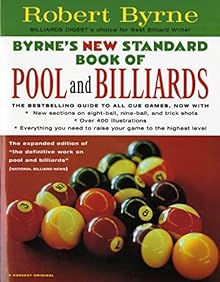
This is the first instructional book that I ever purchased. Who knew that a collection of table drawings and shot descriptions could be so funny? A friend of mine had lent me a copy many many years ago. After reading only about 10 pages of it, I marched out and bought my own. You should too. (And while you’re at it, pick up Bryne’s second instructional book Advanced Technique in Pool & Billiards.)

Ever wonder how many possible ball arrangements there are in a straight-pool rack? Wonder no more. Mike Shamos, in this wonderful collection of the trivial and the historic, tells us. Here, you can learn about Kelly Pool, the Lambert Trophy, and the origin of the slang "weight." There’s plenty of pictures. As a hardback, it makes a perfect addition to any coffee table.

There is no more important novel related to American pool as The Hustler, by Walter Tevis. Although not based on the life of Rudolf Wanderone, it nonetheless made success of his career. (Wanderone was the hustler who appropriated the Minnesota Fats name). The book also led to the 20th Century Fox movie, which led to a great renaissance for our sport during the 1960s. You also can read all about The Hustler, Minnesota Fats, the 1960s renaissance -- and the interrelation between the the three -- in my own book Hustler Days.
Videos
If you don’t feel like reading, here are a couple of video recommendations:
Anything from Accu-Stats. Call Pat Flemming over at Accu-Stats HQ and he'll recommend a good one. He's never steered me wrong once. Here's his number: 1-800-828-0397. You can also check out the website at accu-stats.com.

This film is awesome, one of my all-time favorites. The scenes between Paul Newman, as Fast Eddy, and Jackie Gleason, as Fats, are inspirational. The two-disk collector's edition also includes several extra documentaries, including one entitled “Swimming with Sharks” with commentary from Max Eberle and myself. So there’s that.
About PoolSynergy
Pool Synergy is an online collaborative effort by pool and billiard bloggers, in which each agrees to write about a single theme. PoolSynergy submissions are published simultaneously by each of the participating blogs on the 15th of every month. To read a list of the other fine contributions this month, check out the Pool Is A Journey blog, which you can find here.


 Posts
Posts


