Interested in the the history of UK billiards and snooker? Check out the UK Billiard and Snooker Archive, which touts itself as the only website dedicated to to the history of snooker and english billiards. The website charts the history of both games, and includes biographies of several key players like Joe Davis and Willie Smith.
Here's the link: http://www.billiardsandsnookerarchive.co.uk/
Wednesday, November 8, 2017
Sunday, April 2, 2017
St. Elmo: Favorite Haunt of Wimpy Lassiter
This photo of the St. Elmo pool hall in Norfolk, Virginia. It was the favorite haunt of the world famous Wimpy Lassiter and also was featured in the book, Hustler Days, which is available from online retailers. It was taken by photographer Harry C. Mann and is available under common licensing from the Library of Virginia.
You also can learn more about the pool hall and Lassiter in the book, Hustler Days, which is available online.
Former sailor John Pizzuto was a St. Elmo's regular during the late 1960s. He sends us this brief recollection of his time there.
"Most of the players had a nickname, mine was Sailorboy. I kept Sam Bass in beer money Saturday afternoons, getting straight pool "lessons" from him. Carolina kept my cue behind the bar when we were out to sea. I played golf and straight pool with Old Red. He was pretty old and towards the end of my time there, he didn't come in very often. At the time he seemed like he was in his 70s. Some of the other regulars were Cab Driver, Onion Head Red and a pretty good player named Cash McCall. He ran a bartending school.
One Saturday afternoon, I was practicing alone. One of the regulars egged me into asking "that old man in the chair" to play some nine ball. I walked over and asked, but he politely declined. I awkwardly offered him a spot. He shook his head. As I walked back to my table, the regulars all started laughing, asking me if I knew who that was. By then, I figured it must be Wimpy. I had heard he came in from time to time, but I had never seen him. I walked back over to where he was sitting and offered my hand in apology. He shook it with his left."
Labels:
Hustler Days,
Norfolk,
St. Elmos,
Wimpy Lassiter
Sunday, March 12, 2017
Fox: Death by Fly or Shark?
This excerpt, below, from an old edition of the New York Times describes the discovery in 1866 of the body of pool player Louis Fox in a Rochester, New York river. But how did Fox's body get there?
![]() |
![]() |
| Deery, left and Fox |
In a slightly different account from the Semi-Centennial History of the City of Rochester (by William Farley Peck and published in 1884), Fox killed himself because he was distraught over the "loss of his championship cue." Meanwhile on page 103 of the 1898 edition of Championship Billiards, Old and New, the author claimed that Fox, "some time after his defeat, was found dead in the river, and it has always been claimed that, crazed by grief, he committed suicide."
So, the question at hand -- as put forth by billiards writer J.D. Dolan -- is whether Fox was killed by a fly or a shark.
Saturday, December 12, 2015
HOLIDAY GIFT GUIDE: Books & More
Does that special pool lover in your life already own 20 instructional books? How about going another direction this year and getting him or her the gift of pool history? As we like to say at poolhistory.com, a sport without history is a sport without consequence. But there's plenty of literature out there to help fill the gaps. I've included some of my favorite selections (including a couple of my own books) plus some video resources and other material. You can find each of these potential stocking stuffers online. Keep reading for all the details.THE HUSTLER & THE CHAMP
R.A. Dyer’s book, The Hustler and the Champ, chronicles the long colorful rivalry between pool’s greatest tournament player and its most colorful hustler. Read more about The Hustler and the Champ at the poolhistory.com website. Purchase the book on Amazon.
This critically acclaimed book tells the story of pool in the 20th century and of the 1960s revival brought on by 20th Century Fox film, The Hustler. The book profiles some of the game’s greatest players, including Rags Fitzpatrick and Harold Worst. Purchase the book on Amazon.
Freddy "The Beard" Bentivegna was an old-time pool hustler, a banking expert and one of our sport's great storytellers. I was sorry to hear of his passing in 2014. I've highlighted three of his books here. Each is well worth the investment. You can purchase them directly from his website, www.bankingwiththebeard.com.
3 GREAT BOOKS BY THE LATE, GREAT FREDDY "THE BEARD"
Freddy "The Beard" Bentivegna was an old-time pool hustler, a banking expert and one of our sport's great storytellers. I was sorry to hear of his passing in 2014. I've highlighted three of his books here. Each is well worth the investment. You can purchase them directly from his website, www.bankingwiththebeard.com.
THE “ENCYLOPEDIA” OF POOL HUSTLERS
This reference work is not anything you’ll ever read from start to finish — at least, not in any disciplined way — but it’s a book you’ll want to have around your nightstand or in The Brown Study. It’s chock full of quick and quirky anecdotes about players both famous and obscure (mostly obscure), all seasoned with Bentivegna’s aromatic brand of BS.

BANKING WITH THE BEARD
Freddy's first book, "Banking With The Beard," includes a banking formula that incorporates the concepts of acquired english and cue ball english. It's 200 pages long. The tips are invaluable.

GOSPOOL OF BANK POOL
Freddy's second book, "The GosPool of Bank Pool," also runs about 200 pages long -- but about half of it is devoted to colorful anecdotes. I found myself laughing out loud as I read about Minnesota Fats, Eddie "The Knoxville Bear" Taylor, Cornbread Red and Harold Worst.

GOSPOOL OF BANK POOL
Freddy's second book, "The GosPool of Bank Pool," also runs about 200 pages long -- but about half of it is devoted to colorful anecdotes. I found myself laughing out loud as I read about Minnesota Fats, Eddie "The Knoxville Bear" Taylor, Cornbread Red and Harold Worst.
AND MORE BOOKS...
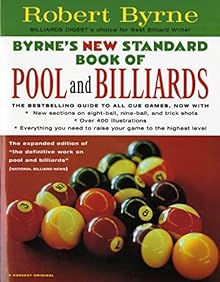
This is the first instructional book that I ever purchased. Who knew that a collection of table drawings and shot descriptions could be so funny? A friend of mine had lent me a copy many many years ago. After reading only about 10 pages of it, I marched out and bought my own. You should too. (And while you’re at it, pick up Bryne’s second instructional book Advanced Technique in Pool & Billiards.)
Ever wonder how many possible ball arrangements there are in a straight-pool rack? Wonder no more. Mike Shamos, in this wonderful collection of the trivial and the historic, tells us. Here, you can learn about Kelly Pool, the Lambert Trophy, and the origin of the slang "weight." There’s plenty of pictures. As a hardback, it makes a perfect addition to any coffee table.
There is no more important novel related to American pool as The Hustler, by Walter Tevis. Although not based on the life of Rudolf Wanderone, it nonetheless launched his media career. The book also led to the 20th Century Fox movie and the great renaissance for our sport during the 1960s. You also can read all about The Hustler, Minnesota Fats, the 1960s renaissance -- and the interrelation between the the three -- in my own book Hustler Days (referenced above).
Danny McGoorty was a poolroom hustler, ladies’ man, and drunk. Robert Bryne recorded McGoorty’s life's story, and then used it to craft one of the most delightful and hilarious biographies ever written about an American cueist. This book also includes fun anecdotes about some of the most important players of the last century, including Mosconi, Fats, Welker Cochran and even Alfredo De Oro.
Willie Mosconi in his biography Willie’s Game co-authored with Stanley Cohen, speaks of Fats, Wimpy Lassiter, Irving Crane and several others. Speaking about Onofrio Lauri, Mosconi said: "You wouldn’t want him to be the guy standing between you and a championship. He was a sensational shot maker. If he got on a roll he could run out on you quicker than you could count the balls." Find the Kindle edition here.
THE BANK SHOT AND OTHER GREAT ROBBERIES
This is the autobiography of Minnesota Fats, co-written by Tom Fox and with an introduction by R. A. Dyer. It tells Fats' story is his own colorful words. A great fun read. Find it online here.
POOL WARS
Jay Helfert's great book Pool Wars is subtitled "On the Road to Hell and Back with the World's Greatest Money Players." That's particularly apt, given that Helfert here has collected stories about Charlie the Ape, Ronnie Allen, Cuban Joe, and of course Minnesota Fats. Helfert writes about brawls and sleeping in pool rooms. He has some wonderful old pictures of a crazy skinny Earl Strickland and Buddy "Rifleman" Hall. A great read.
OTHER STUFF ...
If that special someone doesn't feel like reading over the holidays, here are a few non-book recommendations:
PHOTOS BY HELAINE GARREN
In 1970 Helaine Garren shot a series of images at Bensinger’s Pool Hall while she was a student at the Art Institute of Chicago. Garren's astounding photos have won rave reviews from Slate, the Chicago Reader and every pool publication you can think of. Buy prints directly from Ms. Garren at her website, www.helainegarren.com.
PHOTOS BY HELAINE GARREN
In 1970 Helaine Garren shot a series of images at Bensinger’s Pool Hall while she was a student at the Art Institute of Chicago. Garren's astounding photos have won rave reviews from Slate, the Chicago Reader and every pool publication you can think of. Buy prints directly from Ms. Garren at her website, www.helainegarren.com.
Call Pat Flemming over at Accu-Stats HQ and he'll recommend a good DVD. He's never steered me wrong once. Here's his number: 1-800-828-0397. You can also check out the website at accu-stats.com.
The Hustler is the single-most important film ever made about our sport. For that reason alone, it deserves a revered sport in the DVD library of any lover of pool history. The scenes between Paul Newman, as Fast Eddy, and Jackie Gleason, as Fats, are inspirational. The two-disk collector's edition also includes several extra documentaries, including one entitled “Swimming with Sharks” with commentary from Max Eberle and myself. So there’s that.
-- R.A. Dyer
Saturday, September 19, 2015
VIDEO: Ko bests SVB in World 9-ball Final
By Ted Lerner
WPA Press Officer
Doha, QATAR -- Showing
why he is not only one of pool’s most talented performers, but perhaps
its most hardcore player as well, Taiwan’s Ko Pin Yi captured his first
World 9-ball Championship tonight in Doha, trading blows with the USA’s
Shane Van Boening for two and a half hours before pulling away in
crunch time to win 13-11.WPA Press Officer
Both
players put in gritty, high-quality performances, with brilliant shot
making under pressure, coupled with just a handful of errors from both
superstars. The outcome was in doubt right down to the dramatic end, but
it was Ko who seemed to will himself over the finish line for the
historic win.
The
win is the 26 year old Ko’s second world championship this year, after
capturing the 10-ball world title in the Philippines back in February.
That victory seven months ago served to fulfill the former teen prodigy’s long cherished dream of winning his first world title.
Tonight’s win puts Ko in the pantheon of all time pool greats.
| Shane Van Boening, photo courtesy Richard Walker |
| Taiwan's Ko Pin Yi wins big in Qutar. Photo by Richard Walker |
The
day began with the two semi-finals and the contrast couldn’t have been
more different. Playing on the TV table against Pin Yi’s younger brother
Ko Ping Chung, Van Boening again hit every break shot perfectly—wing
ball down and open shot on the one. He quickly jumped out to a 5-0 lead
before the 20 year old Ko got one on the board. But then it was straight
back to the race track and before anyone knew it the American had won
the match 11-1. Van Boening was making 9-ball look like child’s play.
On
the adjacent table Ko Pin Yi and former World 9-ball Champion Wu Jia
Qing, as expected, put on a show for the ages. Wu had Ko pinned down at
6-2, but Ko clawed his way back to 6-5. Leading 7-6 Wu played an errant
safety and Ko got his first tie, and a shot of confidence to boot and
he soon went ahead 8-7.The pair then took their games to the next level,
trading pressure packed break and runs, safeties and clutch pots. Wu
would never lead again as the two Taiwanese were tied at 8, 9 and then
10. Having won the lag, Ko had the last break and broke and ran for a
well deserved spot in the finals.
An
hour later the race to 13 final began and, based upon thumping Van
Boening had given to Ko’s younger brother, and everyone else he had
faced this week, almost nobody had picked the Taiwanese to pull off the
win. Ko, however, is clearly not ‘everyone else.’
The
Taiwanese won the lag and after a safety battle, grabbed the first rack
to go up 1-0. Van Boening notched the next rack, and the pair traded
frames with each holding serve until the score reached 4-4. But one
thing was vastly different for the American in this match compared to
all his previous matches. Although he was having some success on the
break, he wasn’t nearly as flawless on that break as he had been
throughout the week.
Then
in rack 9 Ko was the recipient of several lucky rolls that would be the
first of nearly a handful that would help propel him forward throughout
the match. Ko scratched shooting at the 7-ball but was fortunate that
the same ball ended up married to the 8-ball, leaving Van Boening only a
difficult bank, which he missed. Ko then missed the subsequent shot,
but this time the 7-ball got snookered. Ko eventually took a rack that
he had no business winning to move up 5-4.
| Ko Pi Yin, photo courtesy Richard Walker |
Shane
found his break and ran the next rack to tie it at 5-5. Then in the
next frame Ko got lucky again. He went for a 2-9 pot, missed, only to
see the 9-ball drop in the side for a fluke win and a 6-5 lead.
To
his credit Van Boening kept his composure and it served him well. Two
break and runs sandwiched around a Ko scratch brought the American his
first lead of the match and an 8-6 advantage.
Just
as he did against Wu earlier, however, Ko used the deficit as his
motivation to stage a fight back. At the same time Van Boening lost his
momentum and several mistakes cost him plenty. Ko won two straight to
tie the match at 8-8.
Ko
looked to be going up 9-8 before a shocking scratch while shooting an
easy 8 gifted Van Boening the rack and a 9-8 lead. But then the American
gifted one back in the next frame, losing position on the 7 and leaving
a jump shot in the jaws. The match was now tied at 9-9 and the world
title looked like it was going to come down to a flip of the coin.
With
the pressure palpable Ko took back the lead in the next frame. Van
Boening pounced on an errant 4-ball and tied it again at 10-10. Ko
responded with a break and run. And then Van Boening did the same to tie
it at 11-11. Showing incredible moxy, Ko then fired back with yet
another break and run. The Taiwanese was one away from the crown.
The
final frame served as a metaphor for Van Boening’s one and only match
in the tournament where he experienced breaking struggles. With no open
shot after the break, the American had to push out. Ko declined the shot
and Van Boening’s attempt at the two-ball went astray, leaving an open
table for Ko. A battled hardened Ko took his time and picked off the
remaining colors and claimed his very first World 9-ball Championship.
| Ko Pi Yin takes the gold. Photo by Richard Walker |
“When
I won the World 10-ball in the Philippines, that was great,” Ko said.
“But winning the World 9-ball Championship, this is unbelievable. I’m
really happy because before I came to Doha I wasn’t playing that good.
But I worked really hard on my game, especially my break shot.
“I
definitely didn’t play per perfect in the final. But I played really
good in the semi-final and of course that is more important because that
got me to the final. I was 7-6 behind when Wu made one safety mistake,
and after that everything changed.
“In
the previous matches I was playing perfect, just like Shane, who is
such a great player, a real gentleman. But it’s the final of the World
9-ball championship and you know so many things can happen. I think we
both played good and both made some mistakes. I feel that I got a few
lucky rolls to help me win the match. There was a lot of pressure
especially from 8-8 on. But at the end of the match I played good and I
am happy I was able to stay patient. You just never know in 9-ball. The
ball is round and you have to wait until the last 9-ball drops.”
An
obviously gutted Van Boening knew he hadn’t played in the same
swashbuckling style that had brought him to the finals, especially with
the break shot. The American, however, still played a brilliant match.
He also took the loss like a man, gave credit where it was due, and
promised his fans he’d snap a world title off soon enough.
“He
got a lot of fortunate rolls and he got lucky to hook me a couple of
times after misses,” Van Boening said. "But I also made a couple of
mistakes that I should have never have made. He played great and really
didn’t make that many mistakes. I think I made more mistakes than he did
and that is what cost me.
“He
was breaking good and I was breaking bad. There were more people in
here(the Al Arabi Sports Club) which changed the temperature and the
break a little bit. I really think that was the difference. My break
wasn’t working for me. I was having trouble getting a clear shot to run
out. That’s the way the game plays.
“There’s
nothing I can do. I’m not that disappointed. It’s an honor to play in
the world championship finals. I know I can’t win every tournament.
Either way if I win or lose it was fun to play in the finals. I’ll be
back.”
**The
2015 WPA World 9-ball Championship was sanctioned by the World
Pool-Billiard Association (WPA), the governing body of pool, and promoted
and hosted by the Qatar Billiard and Snooker Federation (QBSF).
The
winner of the 2015 World 9-ball Championship received $30,000. The
runner received $15,000. The total prize fund was $200,000.
RESULTS FINAL
Ko Pin Yi (TPE) 13 – 11 Shane Van Boening (USA)
RESULTS SEMI-FINALS
Shane Van Boening (USA) 11 -1 Ko Pin Chung (TPE)
Ko Pin Yi (TPE) 11 -10 Wu Jia Qing (CHN)
Shane Van Boening (USA) 11 -1 Ko Pin Chung (TPE)
Ko Pin Yi (TPE) 11 -10 Wu Jia Qing (CHN)
Sunday, August 30, 2015
Man of Many Talents: Hall of Fame Inductee Charles Ursitti Known for Marksmanship
Did you know that Charles Ursitti, recent Hall of Fame inductee and a key figure in the book The Hustler & The Champ, was also a highly competitive sharpshooter? He learned about guns from his father, and then went on to shoot both in public exhibitions and in tournaments.
Charlie was the driving force behind the Great Shoot-Out, the famous 1978 televised match between Minnesota Fats and Willie Mosconi. You can read more about that in The Hustler & The Champ, published by Lyons Press. Charlie also has amassed one of the greatest repositories of historical pool and billiard statistics in America. You can see those stats online, for free, at charlesursitti.com.
The New York Newsday article shown above describes Ursitti's victory in the individual shooting competition at the Charlton Heston Celebrity Shoot in California, back in July 1993. That's Heston himself in the photo, in the middle, and the actor Paul
Sorvino on the left. Charlie is pictured at right.
According to the article: "Ursitti's dead-eye shooting stole a large part of the show. 'It was
unbelievable,' said Brendan Banahan, Ursitti's teammate and publisher of Field and Stream magazine. 'I'd never seen anyone shoot as confidently and accurately.' Ursitti earned a perfect score in all four events of the handgun competition and recorded the highest score of 100 participants."
Ursitti is to be officially enshrined into the Billiard Congress Hall of Fame during a ceremony in October. Wimpy Lassiter, the late hustler and fellow Hall of Famer who figured prominently in Hustler Days, also was an expert marksman.
-- R.A. Dyer
Charlie was the driving force behind the Great Shoot-Out, the famous 1978 televised match between Minnesota Fats and Willie Mosconi. You can read more about that in The Hustler & The Champ, published by Lyons Press. Charlie also has amassed one of the greatest repositories of historical pool and billiard statistics in America. You can see those stats online, for free, at charlesursitti.com.
Sorvino on the left. Charlie is pictured at right.
According to the article: "Ursitti's dead-eye shooting stole a large part of the show. 'It was
unbelievable,' said Brendan Banahan, Ursitti's teammate and publisher of Field and Stream magazine. 'I'd never seen anyone shoot as confidently and accurately.' Ursitti earned a perfect score in all four events of the handgun competition and recorded the highest score of 100 participants."
Ursitti is to be officially enshrined into the Billiard Congress Hall of Fame during a ceremony in October. Wimpy Lassiter, the late hustler and fellow Hall of Famer who figured prominently in Hustler Days, also was an expert marksman.
-- R.A. Dyer
Saturday, August 22, 2015
Ortmann, Ursitti Enshrined in Hall of Fame
![]() |
| Olivoer Ortmann, left, and Johnny Archer. Courtesy Billiards Digest. |
Ortmann, 48, of Hamburg, will enter the Greatest Players wing of the BCA Hall of Fame, while Ursitti, 68, who was born in New York City and now resides in Florida, will be honored for Meritorious Service. Both will be formally inducted during ceremonies on Oct. 29, 2015, at the Sheraton Norfolk Waterside in Norfolk, Va.
One of the most decorated players in Europe, Ortmann led the way for European players in the United States by scoring a shocking win over pool legend Steve Mizerak in the final of the 1989 BCA U.S. Open 14.1 Championship in Chicago. Ortmann went on to win the 1993 BCA U.S. Open, as well as three World Pool-Billiard Association world titles — the 1993 WPA World 9-Ball Championship and the WPA World 14.1 Championship in 2007 and 2010. The fiery Ortmann twice won the International Challenge of Champions (1997 and 2000), and captained Team Europe's winning Mosconi Cup squad in 2002. He also holds 14 European Pool Championship gold medals, 13 Euro Tour titles and was three-time European Player of the Year.
"This is a great surprise to me," Ortmann said, after being notified of his election. "It's great news. To be honest, I had stopped thinking about the hall of fame. Many years ago I thought it was possible, but after years went by, I thought my time had passed."
![]() |
| Charles Ursitti |
Ursitti's career in billiard promotions began when he teamed with boxing promoter Big Fights, Inc., to produce the first-ever meeting of pool legends Willie Mosconi and "Minnesota Fats" in the "Great Pool Shootout." The 1978 ABC-TV Wide World of Sports production drew more than 10 million television viewers, and remains the most watched pool match ever aired in the U.S..
Ursitti went on to promote televised matches between Fats and Mosconi, eventually introducing modern day players like Allen Hopkins and Steve Mizerak into the productions. A seven-year run with CBS Sports Spectacular created opportunities to add more pro players, as well as female stars Jean Balukas and Loree Jon Ogonowski (Hasson).
Ursitti was responsible for pool's initial forays onto cable giant ESPN, where he promoted the "King of the Hill" series and the "Legends of Pocket Billiards" series.
In addition to being a promoter, Ursitti researched and created a database documenting the history of competitive pool and three-cushion billiards in the U.S., chronicling the sport from 1878 to present day. The database is available online for free at CharlesUrsitti.com.
"Needless to say, I'm thrilled to be elected into the BCA Hall of Fame," Ursitti said. "When I was first introduced to pocket billiards in 1976, I never dreamed of someday joining the greatest of the great. I consider myself really lucky with all of my promotions, and was honored to work with the legends of the sport, from Willie and Fats, Irving Crane and Jimmy Caras, to Mizerak, Hopkins, Mike Sigel, Jimmy Rempe and the rest. It has been a great trip, and I will cherish that forever."
Voting for the 2015 BCA Hall of Fame was conducted by the USBMA Hall of Fame Board, which consists of USBMA members, elected At-Large members and living members of the BCA Hall of Fame. Induction into the Greatest Players category is awarded to the player named on the most ballots. To be eligible for consideration in the Greatest Players category, a player a) must be 40 years old by Jan. 1 of the year of their induction; b) must have a professional playing career of at least 10 years; and c) must have recorded significant achievements in U.S.-based events.
A special Meritorious Service Committee recommends a person for consideration by the Hall of Fame Board. Induction into the Meritorious Service category is achieved if more than 50 percent of the Hall of Fame Board votes in favor of the candidate.
Ortmann, in his eighth year of eligibility, was named on 60 percent of the ballots, edging out fellow pros Gerda Hofstatter (44 percent) and Kim Davenport (37 percent). Belinda Calhoun, Shannon Daulton, Mary Kenniston, Rodney Morris and Vivian Villarreal each received votes on fewer than 25 percent of the ballots.
Tuesday, August 4, 2015
Pool Historian William Hendricks Dies
Here’s a bit of sad news for pool history fans: William
Hendricks, author of the very good but somewhat obscure Official Standard
History of Pool, Billiards and Snooker, has died.
The World War II veteran was 90 years old. He passed away on May 15th in an Illinois nursing home.
The Official Standard History of Pool, Billiards & Snooker is a hard-to-find gem, one that includes fascinating tidbits about the early history of billiards equipment and the game. A timeline in the book goes all the way back to 1164, and cites the earliest documented use of the word “bille” to refer to certain medieval ball games.
According to an online obituary, Hendricks was born on Sept. 16, 1923 in Alton, Illinois. He served in Europe during World War II and later became a professor at Southwestern Illinois University-Edwardsville and Belleville Area College. He also was an avid pool player.
Although never in wide circulation, Hendricks' book has been cited in many other works, including those by billiards historian Mike Shamos (The Illustrated Encyclopedia of Billiards) and John Grissim (Billiards). I also cite Hendricks in The Hustler & The Champ.
-- R.A. Dyer
The World War II veteran was 90 years old. He passed away on May 15th in an Illinois nursing home.
The Official Standard History of Pool, Billiards & Snooker is a hard-to-find gem, one that includes fascinating tidbits about the early history of billiards equipment and the game. A timeline in the book goes all the way back to 1164, and cites the earliest documented use of the word “bille” to refer to certain medieval ball games.
According to an online obituary, Hendricks was born on Sept. 16, 1923 in Alton, Illinois. He served in Europe during World War II and later became a professor at Southwestern Illinois University-Edwardsville and Belleville Area College. He also was an avid pool player.
Although never in wide circulation, Hendricks' book has been cited in many other works, including those by billiards historian Mike Shamos (The Illustrated Encyclopedia of Billiards) and John Grissim (Billiards). I also cite Hendricks in The Hustler & The Champ.
-- R.A. Dyer
Saturday, June 13, 2015
American Pool History: A Timeline
Here's a work-in-progress timeline of American pool. Feel free to suggest more entries or corrections. One day I'll put this up more permanently on the regular poolhistory.com website.
1565
Pool makes its first appearance in North America, according to Frank G. Menke, a sports historian. A Spanish family brought it with them to St. Augustine, Florida. (Source: Life Magazine, Oct. 8, 1951).
1748
George Washington purported to have won a pool game. (Source: A Brief History of the Noble Game of Billiards, by Mike Shamos.)
1819
Michael Phelan, considered the father of American pool, is born in Castle Comer, County Kilkenny, Ireland.
1824
Michael Phelan and family join father John Phelan in New York City.
1827
The first slate tables appear. Previously, the playing surface of tables was cut from wood and then briefly with marble. However, marble was known to "sweat" in warm weather. [Source: Encyclopedia of Sports, by Frank G. Menke, 1939.]
1835
India wooden cushions are substituted for wooden cushions, which had been popular previously. The India rubber cushions provided a "spectacular bounce," according to sports historian Frank G. Menke. [Source: Encyclopedia of Sports, by Frank G. Menke, 1939.]
1850
Phelan, seen now as greatest player in the United States, publishes Billiards Without a Master.
1856
Phelan’s book, Game of Billiards, is published; he opens a room at the corner of Broadway and 10th, New York. It was considered the finest and most luxurious pool room in the world. He also publishes the first edition of Billiard Cue, the first billiard periodical.
1859
Jim Seereiter and Michael Phelan play in a four-day standing room only tournament in Detroit for an astronomical $15,000. Phelan won; in April Dudley Kavanaugh beats Michael Foley in another high-profile match, also in Detroit.
1863
Phelan retires from active competition; he also offers a $10,000 reward for anyone who can devise a suitable ivory substitute for the manufacturer of billiard balls. This effort has been credited with the eventual development of plastic. Dudley Kavanagh wins in a pro championship in Irving Hall, New York, June 1-9. He becomes second U.S. pool champion.
1865
Vulcanized rubber came into use for cushions, and remains the standard to this day. [Source: Encyclopedia of Sports, by Frank G. Menke, 1939.]
1865
On Sept. 7, Louis Fox and John Deery, joint holders of the world billiards championship of 1864, meet in Washington Hall, Rochester, New York, to decide the 1865 title. According to an account of sports historian Menke: "Fox, far in the lead and on his way to winning, found himself bothered by a fly, which, despite 'shooing,' continued to light on the cue ball. Fox, excitingly trying to chase the fly, miscued, and it was Deery's shot. Deery ran out the string to win the championship. The heart broken Fox rushed out of the hall to a river, leaped in, and was drowned." [Source: Encyclopedia of Sports, by Frank G. Menke, 1939.]
1869
Celluloid, the first industrial plastic, is discovered by New Yorker John Wesley Hyatt. Hyatt was attempting to come up with a substitute for ivory billiard balls, but his new substitutes sometimes exploded on impact.
1873
Jerome Keogh, inventor of straight pool and five-times billiard champion, is born.
1897
Keogh wins his first world championship.
1907
Eight ball is invented. The first three-cushion championship is established.
1910
The game of straight pool is invented by Jerome Keogh.
1911
The very first World 14.1 Tournament was held in 1911 and won by Alfredo De Oro.
1912
Straight pool becomes the official tournament game of pocket billiards.
1913
Rudolf Wanderone, AKA Minnesota Fats, is born in New York on Jan. 13. Willie Mosconi is born in Philadelphia on June 27. The industry reports one of its best years, ever, for table sales.
1914
Dudley Kavanaugh dies in New York on March at age 80.
1916
Ralph Greenleaf competes in his first national championship tournament, held in October at Doyle’s Academy in New York. The 16-year-old Greenleaf was described as a “Boy Wonder” by the New York Times.
1918
Luther Lassiter is born.
1919
Greenleaf wins the first of his 13 world titles.
1929
Greenleaf, playing in Detroit, regains the title – his eighth. He defeats the scoreless Frank Taberski with a sensational 126-ball run.
Harold Worst, future three-cushion and pool champion, is born on Sept. 29 in Grand Rapids, Michigan.
1933
Willie Mosconi makes his national tournament debut.
1941
Willie Mosconi wins the first of 15 world titles.
1948
The Billiard Congress of America is established.
1953
Jerome Keogh, winner of five titles and the inventor of straight pool, dies at age 80 on January 12.
1954
Harold Worst wins the world three-cushion title during an event held in Buenos Aires, Argentina.
1954
Willie Mosconi establishes the BCA-recognized straight-pool high-run record of 536 balls. He accomplished the startling feat in Ohio, on an 8 by 4 table.
1956
Willie Mosconi suffers a stroke.
1961
George Jansco conducts the first of his famous hustler tournaments in Johnston City, Illinois. The tournaments, which lasted about a decade, would eventually attract nationwide attention.
20th Century Fox releases “The Hustler.” The film, starring Jackie Gleason and Paul Newman, would reinvigorate the public’s interest in the sport.
Rudolf Wanderone begins making the fanciful claim that he was the real-life inspiration for the film’s Minnesota Fats character.
1963
Luther Lassiter wins the first of his seven Billiard Congress of America-recognized titles. He won many more non-sanctioned events.
1965
Three-cushion champ Harold Worst briefly conquers the world of pocket billiards with victories at the Las Vegas Stardust tournament in June, and in Johnston City in October and November.
1966
The Bank Shot and Other Great Robberies, the fanciful memoirs written by Minnesota Fats and
Philadelphia newspaper writer Tom Fox, gets published.
1969
George Jansco dies. Brother Paulie takes over management of Johnston City tournament.
1972
After reading newspaper reports of widespread gambling, federal agents on Oct. 26 raid the Johnston City tournament. The '72 tournament would be the last.
1978
Willie Mosconi and Minnesota Fats would play the first of several televised challenge matches. It was the most-viewed pool match in U.S. history.
1984
Earl Strickland wins the first of his historic five U.S. Opens.
1986
The Color of Money, a sequel to The Hustler, opens to favorable reviews. The film stars Tom Cruise with Paul Newman reprising his role as Fast Eddy Felson.
1993
Willie Mosconi dies in Haddon Heights, New Jersey on Sept. 16.
1995
Allison Fisher wins the first of her more than 50 Women's Professional Billiard Association titles.
1996
Minnesota Fats dies on Jan. 18.
2000-2001
Allison Fisher wins 8 consecutive major pro pool tournaments.
2007
Shane Van Boening wins the first of his five U.S. Opens.
1565
Pool makes its first appearance in North America, according to Frank G. Menke, a sports historian. A Spanish family brought it with them to St. Augustine, Florida. (Source: Life Magazine, Oct. 8, 1951).
1748
George Washington purported to have won a pool game. (Source: A Brief History of the Noble Game of Billiards, by Mike Shamos.)
1819
Michael Phelan, considered the father of American pool, is born in Castle Comer, County Kilkenny, Ireland.
1824
Michael Phelan and family join father John Phelan in New York City.
1827
The first slate tables appear. Previously, the playing surface of tables was cut from wood and then briefly with marble. However, marble was known to "sweat" in warm weather. [Source: Encyclopedia of Sports, by Frank G. Menke, 1939.]
1835
India wooden cushions are substituted for wooden cushions, which had been popular previously. The India rubber cushions provided a "spectacular bounce," according to sports historian Frank G. Menke. [Source: Encyclopedia of Sports, by Frank G. Menke, 1939.]
1850
Phelan, seen now as greatest player in the United States, publishes Billiards Without a Master.
1856
Phelan’s book, Game of Billiards, is published; he opens a room at the corner of Broadway and 10th, New York. It was considered the finest and most luxurious pool room in the world. He also publishes the first edition of Billiard Cue, the first billiard periodical.
1859
Jim Seereiter and Michael Phelan play in a four-day standing room only tournament in Detroit for an astronomical $15,000. Phelan won; in April Dudley Kavanaugh beats Michael Foley in another high-profile match, also in Detroit.
1863
Phelan retires from active competition; he also offers a $10,000 reward for anyone who can devise a suitable ivory substitute for the manufacturer of billiard balls. This effort has been credited with the eventual development of plastic. Dudley Kavanagh wins in a pro championship in Irving Hall, New York, June 1-9. He becomes second U.S. pool champion.
1865
Vulcanized rubber came into use for cushions, and remains the standard to this day. [Source: Encyclopedia of Sports, by Frank G. Menke, 1939.]
1865
On Sept. 7, Louis Fox and John Deery, joint holders of the world billiards championship of 1864, meet in Washington Hall, Rochester, New York, to decide the 1865 title. According to an account of sports historian Menke: "Fox, far in the lead and on his way to winning, found himself bothered by a fly, which, despite 'shooing,' continued to light on the cue ball. Fox, excitingly trying to chase the fly, miscued, and it was Deery's shot. Deery ran out the string to win the championship. The heart broken Fox rushed out of the hall to a river, leaped in, and was drowned." [Source: Encyclopedia of Sports, by Frank G. Menke, 1939.]
1869
Celluloid, the first industrial plastic, is discovered by New Yorker John Wesley Hyatt. Hyatt was attempting to come up with a substitute for ivory billiard balls, but his new substitutes sometimes exploded on impact.
1873
Jerome Keogh, inventor of straight pool and five-times billiard champion, is born.
1897
Keogh wins his first world championship.
1907
Eight ball is invented. The first three-cushion championship is established.
1910
The game of straight pool is invented by Jerome Keogh.
The very first World 14.1 Tournament was held in 1911 and won by Alfredo De Oro.
1912
Straight pool becomes the official tournament game of pocket billiards.
![]() |
| Alfredo De Oro |
1913
Rudolf Wanderone, AKA Minnesota Fats, is born in New York on Jan. 13. Willie Mosconi is born in Philadelphia on June 27. The industry reports one of its best years, ever, for table sales.
1914
Dudley Kavanaugh dies in New York on March at age 80.
1916
Ralph Greenleaf competes in his first national championship tournament, held in October at Doyle’s Academy in New York. The 16-year-old Greenleaf was described as a “Boy Wonder” by the New York Times.
1918
Luther Lassiter is born.
1919
Greenleaf wins the first of his 13 world titles.
1929
Greenleaf, playing in Detroit, regains the title – his eighth. He defeats the scoreless Frank Taberski with a sensational 126-ball run.
Harold Worst, future three-cushion and pool champion, is born on Sept. 29 in Grand Rapids, Michigan.
1933
Willie Mosconi makes his national tournament debut.
| Willie Mosconi |
Willie Mosconi wins the first of 15 world titles.
1948
The Billiard Congress of America is established.
1953
Jerome Keogh, winner of five titles and the inventor of straight pool, dies at age 80 on January 12.
1954
Harold Worst wins the world three-cushion title during an event held in Buenos Aires, Argentina.
1954
Willie Mosconi establishes the BCA-recognized straight-pool high-run record of 536 balls. He accomplished the startling feat in Ohio, on an 8 by 4 table.
1956
Willie Mosconi suffers a stroke.
1961
George Jansco conducts the first of his famous hustler tournaments in Johnston City, Illinois. The tournaments, which lasted about a decade, would eventually attract nationwide attention.
20th Century Fox releases “The Hustler.” The film, starring Jackie Gleason and Paul Newman, would reinvigorate the public’s interest in the sport.
Rudolf Wanderone begins making the fanciful claim that he was the real-life inspiration for the film’s Minnesota Fats character.
1963
Luther Lassiter wins the first of his seven Billiard Congress of America-recognized titles. He won many more non-sanctioned events.
1965
Three-cushion champ Harold Worst briefly conquers the world of pocket billiards with victories at the Las Vegas Stardust tournament in June, and in Johnston City in October and November.
1966
The Bank Shot and Other Great Robberies, the fanciful memoirs written by Minnesota Fats and
Philadelphia newspaper writer Tom Fox, gets published.
1969
George Jansco dies. Brother Paulie takes over management of Johnston City tournament.
1972
After reading newspaper reports of widespread gambling, federal agents on Oct. 26 raid the Johnston City tournament. The '72 tournament would be the last.
1978
Willie Mosconi and Minnesota Fats would play the first of several televised challenge matches. It was the most-viewed pool match in U.S. history.
1984
Earl Strickland wins the first of his historic five U.S. Opens.
1986
The Color of Money, a sequel to The Hustler, opens to favorable reviews. The film stars Tom Cruise with Paul Newman reprising his role as Fast Eddy Felson.
![]() |
| Allison Fisher |
Willie Mosconi dies in Haddon Heights, New Jersey on Sept. 16.
1995
Allison Fisher wins the first of her more than 50 Women's Professional Billiard Association titles.
1996
Minnesota Fats dies on Jan. 18.
2000-2001
Allison Fisher wins 8 consecutive major pro pool tournaments.
2007
Shane Van Boening wins the first of his five U.S. Opens.
Friday, June 12, 2015
Michael Phelan, the Father of American Pool — A Timeline *
![]() |
| Michael Phelan, Father of American Pool |
1823 — Father John immigrates to the United States. Here, he begins to operate a number of pool rooms.
1824 — Michael Phelan and family join father John in New York.
1830 — Begins learning the jewelry trade. He eventually abandons this trade and instead follows in his father’s footsteps, devoting himself to the pool business.
1838 — Phelan travels to Galveston, with plans to open a pool room there. The plan goes awry, and Phelan remains stuck and penniless in the south for several years.
1842 — Michael Phelan returns to New York.
1847 — Opens the famous Arcade Billiard Room on Barclay Street, a favorite of the fashionable young men of the day.
1848 —Irish nationalists launch aborted rebellion; Hugh Collender, Phelan's future business partner, flees Ireland — apparently in a coffin — when the rebellion fails; Phelan lends financial support and helps arm militias in the United States.
1850 —Phelan, seen now as greatest player in the United States, publishes Billiards Without a Master. This was pool's first best seller.
1851— Phelan visits Europe as a delegate of the “Insurrectionary Party of Ireland,” meets with rebel leaders; is ejected by British authorities.
1851 or 1852 — Leaves New York for California.
1854-1855 — Returns to New York.
1854 — Begins manufacturing billiard tables, entering into a partnership with Hugh Collender to form Phelan & Collender.
1855 — February, Plays a three-carom match with Monsier Damon, a French expert, for a stakes of $1,000; he opens a room at 39 Chambers Street, New York.
1856 — Phelan’s book Game of Billiards is published; he opens a room at the corner of Broadway and 10th, New York. It was considered the finest and most luxurious pool room in the world. He also publishes the first edition of Billiard Cue, the first billiard periodical.
1858 — Phelan defeats Ralph Benjamin of Philadelphia for $1,000. This is the first recorded billiard match in American history.
1859 — Enters into a high stakes challenge match with John Seereiter In today’s dollars, the stakes would be valued at more than $400,000.
1860 —Buys Tobias C. O'Conner's share of billiard table manufacturing business, O'Conner Collender.
1863 — Phelan retires from active competition. He also offers a $10,000 reward for anyone who can come up with a suitable ivory substitute for the manufacturer of billiard balls. This effort has been credited with the eventual development of plastic.
1865 — Phelan was a founder of the American Billiard Players Association, which was open to professional players, poolroom proprietors and amateurs. Controversially, he brings a large segment of the sport under his control.
1870 — Saves his grandson from drowning during International Yacht Race.
1871 (Oct. 7) — Dies, presumably from the lingering effects of exposure from helping saving his grandson the previous year.
1993 — Inducted into the Billiard Congress of America Hall of Fame.
Labels:
Brunswick,
Hugh Collender,
Michael Phelan,
pool history
Subscribe to:
Posts (Atom)