Wednesday, January 27, 2010

R.I.P.: Houston's Cue & Cushion

Check out the Houston Chronicle blog post about the demise of that city's Cue & Cushion pool hall. It was a great room, having been a favored haunt of Jersey Red and others. It has been replaced by a tony restaurant -- an upscale joint greeted with great enthusiasm by food critics. There are some who seemed almost to have welcomed the demise of the Cue & Cushion, with one food critic going so far as to note "that the new restaurant sprang forth from the carcass of the old Cue and Cushion dive (which) makes the (dining) experience even more delicious."

In its prime the Cue & Cushion was a truly great room. The Houston Press recently had named it the best in the city.

Kudos to my old friend Mike Snyder for seeing fit to post a tribute to the room. (I helped!) Mike and I spent many hours there shooting nine-ball. You can find Mike's post here.


-- R.A. Dyer

Tuesday, January 26, 2010

Best pool player ever: Mosconi or Greenleaf?

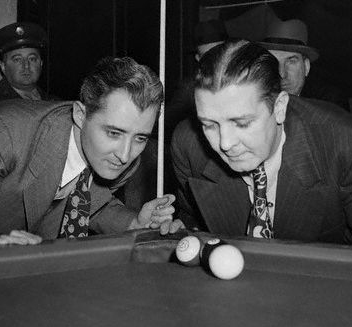
We ran a poll here not too long ago in which we asked who was the greatest player in history. As I might have expected, the top two finishers were Willie Mosconi and Ralph Greenleaf. Neither received a majority of votes. A runoff! So now the question becomes: which player really was better? Thoughts? I'm going to write a column about this at some point and I'm looking for comments. You can see the poll results in the column on the right. That's a picture of both players at the top of this post, with Mosconi on the left.


-- R.A. Dyer

Wednesday, January 20, 2010

Historian Charlie Ursitti posts collection of historic "Billiards Magazine" editions online

I have some very cool news to report from Charles Ursitti, the charming pool promoter and historian. Ursitti has just purchased what must be one of this country's largest private collections of the historic publication Billiards Magazine. According to Charlie, the magazine started in April of 1913 and ran through September 1934 -- for a total of 276 issues. It then became Bowling and Billiards Magazine. Charlie says he has the first issue and about 230 more. "Even the Smithsonian doesn't have a complete set," reports Charlie.

OK, and now here's the really cool part: Charlie is uploading the entire collection onto the web. It's a work in progress, but already there are several years of the publication up for public viewing. "Billiards Magazine featured the best reporting ever done on the sport and I feel every billiard lover should be able to see it," says Charlie. He said he's scanning every page himself.

You can find the magazines at Charlie's website, www.charlieursitti.com or www.charlesursitti.com. He plans to eventually divide the site into 16 to 20 sections, and it will include reproductions of his posters, program books, tobacco cards and photos. I've seen some of Charlie's collection firsthand during a visit to his previous residence in New York City and I have to say it is something to behold. That's a picture I took of him in his stacks, holding up an old edition of Billiards Magazine.

So go check out more of them at Charlie's site. It's great.


-- R.A. Dyer

Thursday, January 14, 2010

Pichitas: A Costa Rican Pool Documentary


Pichitas: A Costa Rican Pool Documentary from R A Dyer on Vimeo.


This is the third in a series of posts submitted in coordination with other online pool writers. It's part of the Pool Synergy project hosted this month by billiardcoach.com. Look for more installments in the future.

As usual, I'm taking great liberties with my homework. Our PoolSynergy assignment this month was to write about "some activity, training, or experience outside of the world of billiards and how that could be applied to help a person's pool game." Well, first off--I'm not really going to write about anything. Instead I'm submitting a documentary, the one you see attached to the top of this post. It's called "Pichitas" and it's about Costa Rican pool players. And as for it describing an "activity, training, or experience that could help a person's game" -- well, you can be the judge.

The documentary is something I put together about 18 years ago. It ran briefly on cable access TV in Houston and then pretty much has been sitting in my closet ever since. I got my son to create an electronic file of the film that would be appropriate for use on my blog -- and viola -- here it is.

And so how, you may ask, does this film illustrate some activity outside the world of pool that can help a person's game? Well, the fact of the matter is that I came to pool largely because of my willingness to go exploring. I lived for several years in Costa Rica, spent much of that time wandering around the streets of San Jose, and finally ventured up the steps of "Center Pool," which is the pool hall featured in this film. There I met a wonderful cast of characters, some of whom were vaguely disreputable. I watched them play pool and I fell in love with the game.

So, that's it. Go exploring. Take risks. Learn about other people. That's the activity outside the pool world that led me to improve my game.

OK, I know it's a stretch -- but whatever. I was never much good at homework anyway.

-- R.A. Dyer

Tuesday, December 15, 2009

Parica, Fats inducted into One Pocket HOF

This just in from the One Pocket Hall of Fame: Minnesota Fats and Jose Parica have been selected to become its two newest inductees. The organization also has inducted Chicago's Glenn "Piggy Banks" Rogers for his prowess in bank pool.

The One Pocket Hall of Fame is sponsored by Onepocket.org. Unlike the Billiard Congress of America Hall of Fame (the two endeavors are in no way affiliated) the One Pocket Hall of Fame proudly honors players known for their heart in high-stakes action matches. As noted in the One Pocket Hall of Fame release: "Everyone knows that pool has always had two very different cultures of competition – the establishment culture of tournaments, wholesome recreation and industry endorsements on the one hand, and the after-hours culture of gambling and hustling on the other hand. It is the mission of the One Pocket Hall of Fame to honor and remember those great players and great games that represent the legacy of Pool in Action."

As such, the induction of Fats was a great choice. A dangerous one-pocket player during his prime, Fats is also remembered as a great promoter of the sporting life associated with pocket billiards. His real name was Rudolf Wanderone. He became famous after the release in 1961 of The Hustler, the film starring Jackie Gleason and Paul Newman. He was also an important participant in the early Johnston City tournaments.

Parica, a former Derby City champion, has gained a reputation as one of the nation's most formidable one-pocket players. Known as "Amang" by his friends (tagalog for "father"), Parica was among the first from pool's so-called "Philippine Invasion." His after-hour match-ups with fellow legend Efren Reyes have become the stuff of legend. That's a picture at the top of this post of Parica (courtesy Steve Booth at Onepocket.org).

The third inductee, "Piggy Banks," emerged as one of Chicago's leading bank players. And that's from a city known for great bankers.

In addition, the Hall of Fame also will present its Lifetime Pool in Action award to Seattle's Harry Plattis. According to the Hall of Fame release: "Harry’s name has been synonymous with pool action for more than forty years. Even as he built a successful law career he has maintained an impressively competitive game and a willingness to mix it up with champions for big money, both as a player and a backer."

The ceremony will take place at the Derby City tournament, during a Jan. 26 banquet hosted by one-pocket Hall of Famers Grady Mathews and Freddy "The Beard" Bentivegna. The Horseshoe Casino in Elizabeth, Indiana hosts the tournament. Advanced tickets are available through the OnePocket.org web site. Any remaining tickets will be available at the Derby City Classic.

-- R.A. Dyer

Sunday, December 13, 2009

PoolSynergy: Billiards Tales and Folklore

This is the second of a series of posts written in coordination with other online pool writers. It's part of the Pool Synergy project hosted this month by Samm Diep's pooltipjar.com. Look for more installments in the future.

Our PoolSynergy topic this month is “Billiard Tales.” As part of my contribution I'm giving everyone an assignment. Find a poolroom in your area popular with the old timers and sidle up next to a few of them at the bar. It’s important that you find at least two or three of these guys sitting together. Four is even better. And I’m not talking about the middle-aged guys, I’m talking about the really old ones, the guys who have been around the pool halls 30 or 40 years at least.

Buy them a beer if you want, or just sit quietly. And then wait.

I guarantee you that within the first half hour you’ll start hearing stories of who took whom and for how much, or about the time some shark came to town, or about the big score by the local champ. Some stories will be verifiable, others not so much. I’ve even heard deadly serious tales of the supernatural.

To me, the form of these billiard tales is just as interesting as the content. That is, it's not what the stories are about, per se, but how they're communicated. The oral tradition is key. Most of the great old stories never get written down, never appear in newspapers -- and they grow in the telling. These stories pass from older players to younger ones, and as long as the community remains intact -- e.g., as long as the poolroom remains standing and the same men and women continue to frequent it -- the legends remain alive.

Now here's a thought. Bear with me, but I think it's true. I believe these boozy recollections have a lot in common with the colorful stories that might get told by village elders around a camp fire. Listen to the old timers and you'll hear tales of heroes and villains and especially tricksters. Oral tradition (according to my quick research on Wikipedia) refers to the "transmission of cultural material through vocal utterance.” The oral traditional also has long been associated with folklore. I would argue that many of the stories told by old-time pool players are part of the folkloric tradition, but of an urban sort.

Some of my favorite Billiard Tales involve Minnesota Fats. In them Fats might be razzing an event promoter about the dress code, or cracking wise about the straight-laced "fun players," or gleefully robbing a tournament player during a high-dollar gambling session. These stories typically pits Fats against some symbol of the conservative billiards establishment.

As is the case with many trickster stories from folklore, Fats in these stories becomes an amoral and comic figure confronting the hypocrisy of the status quo. The billiards establishment would portray our sport as a clean-cut endeavor where no one ever gambles and where the dress code is strictly enforced. Minnesota Fats would portray it for what it really is. As a classic trickster, Fats confronts established authority, lies, and can act in amoral ways. But he also becomes an ironic symbol of truth.

I used to live in San Jose, Costa Rica. I remember hearing stories there about a hustler named “Pichitas” -- about how he would send well-dressed businessmen packing, or how he created this great shot from nowhere, or how he became a master of the 5 by 10s. I even remember the Pichitas "origin myth" -- in that stories were told about how he got his name (which, by the way, translates to “Tiny Dicks.”) These stories were told with something approaching reverence and at first I thought they were specific to Latin America. But I later discovered that they could have just as easily been told about Wimpy Lassiter or Jersey Red or U.J. Puckett. In each case, the players are portrayed as heroic or trickster figures, and in each case the stories are passed along directly through word of mouth. I also recognized in each case messages about the "culture" of the pool room, in that they would communicate lessons about such matters as gambling etiquette, attach value to certain sorts of figures and heap ridicule on others, and define the language common to members of the "tribe".

And so that brings us back to this month's assignment. Go sidle up to the bar, order a drink, and spend some time listening to the old timers. If you hear something good, remember it, and pass it along. Better yet, send me your stories and I'll post them up on this blog or use them as a fodder for a future Untold Stories column.

Some of the best Billiard Tales have never been written down. This puts them at risk for being lost forever. But through the magic of the Internet, we can now share the wisdom of our village elders with the world.

You can read a bit more about these ideas in The Hustler & The Champ. If you have your own old time story, send it to me at
hustlerdays@yahoo.com.

Wednesday, December 2, 2009

Samm Diep on Efren Reyes


Here's a video from Samm Diep, a reporter for InsidePool magazine and the woman behind The Tip Jar pool blog. She's also a contributor to the new PoolSynergy project, in which various pool writers contribute an article each month about a common theme. In Samm's most recent contribution, she discussed when to play position in the side pocket versus playing position for the corner pocket.

I know the video isn't technically about pool history, which is what I focus on here. However, it's about Efren Reyes, a Hall of Famer who's played plenty of historic matches. The video caught my attention, in that Efren is so infrequently interviewed — at least by the English-speaking press. Efren carries around arthritis cream. Who knew?

Monday, November 16, 2009

Introducing the PoolSynergy project: A new collection of online pocket billiards writing


Check out the first edition of PoolSynergy, contemplated as a monthly collection of great pool writing from the web. Poolsynergy the brainchild of John Biddle, host of the www.poolstudent.com website. This month's theme is "Strategy,” and it features contributions from eight writers, including myself. Here's a brief description of these first contributions, with links to where you can find them.

Samm Diep, well known for her blog The Tip Jar, talks about how she improved her game when she took another look at using the side pockets instead of the corners in her piece Corner vs. Side.

Approaching the topic of strategy from a different perspective, Mike Fieldhammer, a BCA Certified Instructor,challenges conventional wisdom in Strategy: Should it Change Based on Your Opponent? Mike’s piece shows you how to gain an advantage at the table and win more often by taking your opponent’s abilities and style into account.

In Offensive Safeties in 8 Ball (works only in IE), Joe Waldron makes clear that safeties aren’t just defensive shots when you have nothing else, but can play a strong offensive role as well. Waldron is the host of Pocket Billiards Review, which is always filled with insightful articles about the mental game.

Also about strategy at the table, John Biddle’s article Thinking Your Way to More Pool Victories can help you raise your winning percentage. John is the man behind the PoolSynergy project.

"FastMikie” McCafferty’s wise and insightful post The Impossible Dream talks about the role pool plays in your life strategy. Mike writes at Diary of a Pool Shooter, the longest continually running blog about pool.

Gail Glazebrook’s post, The Deliberate Attack, gets you to think “How will I beat you” and then gives you an approach to follow that works for her. Gail’s blog is confessions of g squared.

Mark Finkelstein, a BCA Certified Instructor and instruction columnist at the hot new pool website NYC Grind, helps you take an objective look at your game in his piece, Assessing Ability … On the Road to Effective Strategy.

Melinda, in A Strategy to Manage the Mental Side of Your Game, helps us to keep our head in the game from the very beginning and recognize issues that need attention before it’s too late. Melinda, who calls herself a wanna-be pool player, lives and blogs in Texas at Pool is a Journey.

I round out this month’s edition with Minnesota Fats: The Quiet Thrashing. It's a story about several gambling sessions between Fats and Richie Florence, during several weeks in Johnston City back in 1970. That's an old picture of Fats at the top of this post.

Monday, November 9, 2009

Minnesota Fats: The Quiet Thrashing


This is the first of a series of posts written in coordination with other online pool writers. It's part of the Pool Synergy project at www.poolstudent.com. Our first topic relates to pool strategy. Look for more installments in the future.


Strategic thinking is often associated with men and women of great dignity. Think Kasparov wordlessly sacrificing a rook for checkmate in three moves, or Napoleon – without panic – wedging his army between two opposing forces in order to defeat both. Pool also has had its share dignified strategic thinkers -- players like the unflappable Allison Fisher, for instance, who was named in 2005 as one of the world’s 50 smartest people. Or there’s the great Efren Reyes, the reserved one-pocket genius.

But what about the loud-mouthed and the brash? Pool has plenty of those sorts too. And believe it or not some of the greatest strategic moves in pool – especially with regards to getting action — have been executed not by men of quiet deliberation, but by those oafish players who so commonly dot our history.

Take for instance Minnesota Fats, one of pool’s great gasbags, a man who never made it through high school and may even have been illiterate. (You can get a sense of Fats' ridiculous schtick in the video at the top of this post.) At least outwardly Fats exhibited none of the reserved grace typically associated with great minds. However, one of my favorite examples of strategic thinking is attributed to Fats.

Here’s the story. Back in 1970 Minnesota Fats was in Johnston City, Illinois making games with Richie Florence, a young player then considered one of America’s best. Florence was flush with cash from a recent score in Alabama. He would have been about 25 years old. Fats was pushing 60.

Witnesses recall that the two players started cheap, maybe $100 or $200 a game, with Richie giving Fats weight. They said Richie was probably beating Fats to begin with, but not by much. That's because every time Richie got hot, Fats would interrupt his shooting by insisting on a bathroom break or by getting a sandwich. Fats also whined incessantly about the spot, about the playing conditions, and about the knucklehead railbirds. Anything to interrupt Richie's concentration.

After a few hours of playing like that, Fats quit, declaring he’d had enough. But he also promised to come back the following night. This, then, was where the real hustle would begin. Because instead of showing up at the appointed hour, Fats called in the next night with some bullshit excuse. He wouldn't be making it in, said Fats -- but maybe he'd come by the following night.

Now, Fats would have known when he placed that call that Richie, then in the spring of his youth, would not simply go back to his motel room to sleep. The wise and sage Fats knew with something close to 100 percent certainty that Richie would instead continue partying, possibly for the entire night.

The next night Fats left Richie waiting again. It was only after a delay of some hours, only after letting Richie drink and gamble unchecked for a while longer, it was only then that Fats showed up again to demand a game. And even then Fats kept interrupting Richie's shotmaking with his multitude of bathroom breaks and phone calls and white bread sandwiches.

Witnesses said this went on for two weeks, with Fats coming in at unpredictable intervals, fresh as a baby. The older player may have even been calling his poolroom spies to discreetly get a handle on Richie's shape. If Richie was playing too strong, Fats would wait a bit longer. When Fats came in it was a simple matter to taunt the less experienced player back into the trap.

Every night Fats won several hundred dollars, but generally no more than a $1,000 or so. For high rollers, it didn't seem like much. But by the end of it, Fats had extracted $20,000 from Richie Florence. “Fats played him like a child, that’s what happened,” recalled Ed Kelly, an eyewitness to the quiet thrashing. “He got Richie doing what he wanted Fats to do, see? Fats was a champion of it.”

Wednesday, November 4, 2009

Billiards Digest on the Galveston World Classic


Just got my new Billiards Digest, which includes an article I wrote about the Galveston World Classic. I was amazed that Immonen won the event, given that just a month later I went to Virginia to watch him also win at the U.S. Open. Somehow -- I don't know how -- Ralf Souquet is still above him on some of the points lists. I also see that the Mosconi Cup roster is filling out, and on the European side it includes Immonen, Souquet, Niels Feijen and Darren Appleton. The American team will include Shane Van Boening, Johnny Archer, Oscar Dominguez and Corey Deuel. The competition is set this year for Dec. 10-13 in Las Vegas, at the MGM Grand.